From This Page
 Also Great
Our Picks

 Also Great
Aluminum (Anodized) vs Cast Iron for a loaf pan: heat retention, maintenance, induction compatibility, and which jobs each wins.
Also Great
| Attribute | Aluminum (Anodized) | Cast Iron |
|---|---|---|
| Heat retention | Fair | Excellent |
| Maintenance | Easy | Seasoning required |
| Induction compatible | Varies | Yes |
| Oven safe | Yes | Yes |
| Dishwasher safe | No | No |
| Weight | Light | Heavy |
| Price tier | Budget | Budget-mid |
| Reacts with acidic food | No | Yes |
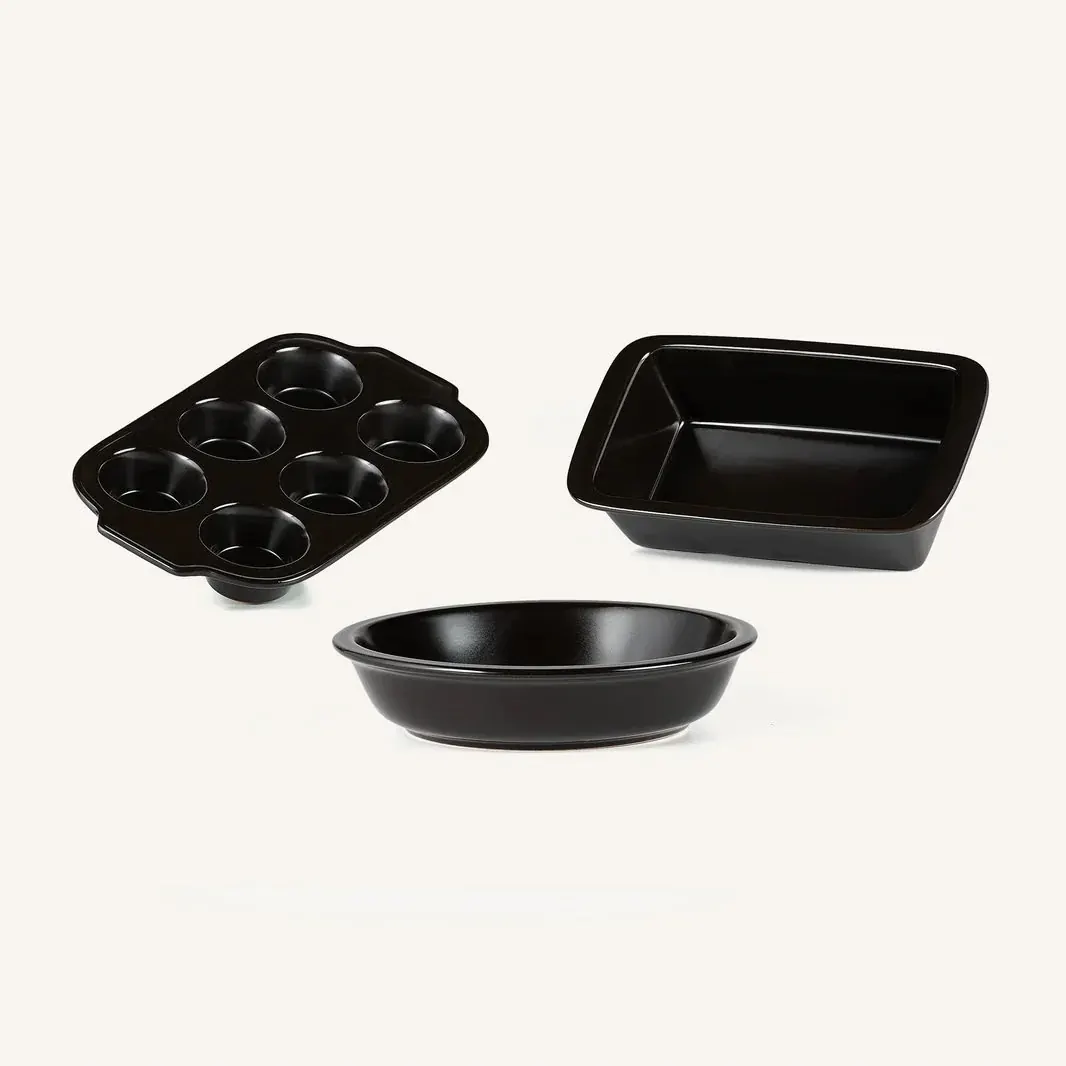
If I had to pick one loaf pan for most home baking, I’d choose anodized aluminum. It’s lighter, easier to handle, simpler to care for, and more forgiving for banana bread, sandwich loaves, and everyday quick breads. Cast iron earns its place when I want a darker, sturdier crust and strong heat retention, but it asks more from me in preheating, lifting, and maintenance.
The biggest difference comes down to how each pan handles heat. Aluminum moves heat quickly, so batter starts baking promptly and the pan responds fast to the oven temperature set in the recipe. Cast iron takes longer to come up to temperature, but once it does, it holds heat extremely well.
That matters in real baking. With anodized aluminum, I usually get a more even, steady bake and a lighter crust. With cast iron, I can expect deeper browning, especially along the sides and bottom. This lines up with the broader cookware science around thermal conductivity and thermal mass, as explained in this overview of pan materials and heat behavior.
For quick breads, that fast response from aluminum is often useful. The edges set without racing too far ahead of the center. Cast iron can still work, but it’s easier to end up with edges that are quite dark before the middle is fully baked if I’m not paying attention.
For most soft, tender loaves, anodized aluminum has the edge. It suits banana bread, zucchini bread, lemon loaf, pound cake, and standard sandwich bread because it tends to produce a more controlled crust and a softer exterior.
Cast iron is better when I want the crust to be part of the appeal. Cornbread is the clearest example, but it also makes sense for hearty whole-grain loaves and rustic breads where a firmer shell is welcome. A good guide to bakeware materials notes the same pattern: heavier materials encourage stronger browning and more pronounced crust development.
That doesn’t mean cast iron automatically bakes better. It means it bakes differently. If the goal is a neat, even sandwich loaf, aluminum is usually easier to repeat successfully. If the goal is a dark, substantial crust, cast iron has a real advantage.
The most common mistake with cast iron is treating it exactly like aluminum. I don’t. Cast iron benefits from a thorough preheat, because a cold heavy pan can slow the early stage of baking. That can affect rise, crust formation, and total bake time.
Once cast iron is hot, I watch the loaf more closely than I would in aluminum. The retained heat keeps working, even near the end of baking and just after the pan comes out of the oven. If the top or edges are coloring fast, I start checking doneness a little earlier than the recipe’s maximum time.
With anodized aluminum, I’m more comfortable following the recipe as written. It’s generally the less fussy option, especially if the pan is a standard size and the recipe was likely written with a metal loaf pan in mind.
Material choice is not just about crust. A loaf pan filled with batter is already awkward. In cast iron, it becomes noticeably heavier. That changes how easy it is to fill, transfer, rotate, and unmold the loaf safely.
If I’m using cast iron, I like to set the pan on a baking sheet before filling if the batter is loose or I know I’ll need a steady transfer into the oven. I also make sure the path from oven to rack is clear. A heavy hot pan is not the moment to improvise.
Anodized aluminum is much easier to lift and maneuver. That matters if I bake often, bake multiple loaves, or simply want a pan that doesn’t feel cumbersome on an ordinary weeknight.
A loaf pan’s internal dimensions matter just as much as what it’s made from. A 9-by-5-inch pan and an 8 1/2-by-4 1/2-inch pan are not interchangeable in every recipe. The smaller pan creates a taller loaf, which usually needs more time. The larger pan gives a lower loaf that may bake faster.
That difference becomes even more noticeable with cast iron because the side crust can develop strongly on a taller loaf. If a recipe is already close to the pan’s limit, using a narrower or deeper pan can push it toward overflow or underbaking in the center.
I try not to fill a loaf pan much beyond two-thirds full unless the recipe clearly says otherwise. If a loaf routinely domes too high or bakes unevenly, I first question pan size before I blame the material.
Anodized aluminum is simple here. A good grease job is often enough, and parchment is especially helpful for sugary or fruit-heavy quick breads. A parchment sling makes lifting easier and helps avoid tearing the loaf by prying it from the corners.
Cast iron needs more care. If it is raw cast iron, the seasoning has to be in good shape or sticking becomes much more likely. I still don’t rely on seasoning alone for sticky batters. For high-sugar loaves, parchment or thorough greasing is still the safer move.
Timing matters too. If I turn out a loaf immediately, it can tear. If I wait too long, sugary residue can set and cling to the pan. A short rest before unmolding is usually the sweet spot.
For cleanup, anodized aluminum is the lower-maintenance choice. Warm water, mild soap, and a soft sponge are usually enough. I skip the dishwasher. Cast iron also should not go in the dishwasher, and it should be dried promptly and lightly oiled if it’s raw. Basic cast iron care guidance follows that same pattern: clean, dry thoroughly, and protect the surface from lingering moisture.
Cast iron is the long-haul material, but only if I’m willing to maintain it. It can last for decades, yet it does need seasoning, prompt drying, and a little attention after use. It also reacts with acidic foods more readily than anodized aluminum, so I don’t let acidic batters sit in a raw cast iron pan longer than necessary.
Anodized aluminum is easier to live with day to day. It does not need seasoning, and it won’t rust like iron. Still, it is not indestructible. A pan that warps, rocks on a flat surface, or has badly damaged coating should be replaced because shape affects baking performance.
If I want the least demanding pan, anodized aluminum wins. If I value durability and don’t mind routine upkeep, cast iron makes sense.
I think of anodized aluminum as the practical default. It’s the better fit for newer bakers, frequent quick-bread bakers, and anyone who wants predictable results with minimal maintenance. It’s also simply easier on the wrists.
Cast iron is a more deliberate choice. I’d pick it for breads where crust matters, for bakers who already keep cast iron in good condition, or for anyone who likes a heavier piece of bakeware that holds heat aggressively.
If I were building a kitchen around one loaf pan, I’d start with anodized aluminum. If I wanted a second pan specifically for darker crusts and rustic bakes, cast iron would be the one to add.
For most home bakers, anodized aluminum is the better all-purpose choice. It bakes evenly, is easy to handle, and needs less maintenance. Cast iron is better when the goal is a darker, firmer crust.
Yes. Cast iron heats more slowly and retains heat longer, which usually leads to deeper browning and a stronger crust. Aluminum responds faster and tends to produce a lighter exterior.
Anodized aluminum is usually the easier choice for quick breads. It helps the center and edges bake in a more balanced way, without making the crust overly thick.
If it is raw cast iron, yes. Seasoning helps protect the surface and improve release. Enameled cast iron is different and should be cared for according to its manufacturer instructions.
A 9-by-5-inch pan works for many recipes, but plenty of loaf recipes are written for 8 1/2-by-4 1/2-inch pans. Matching the recipe’s intended size matters because loaf height and baking time change with capacity.
Anodized aluminum is the better everyday loaf pan for most kitchens because it’s lighter, easier to care for, and more predictable across a wide range of recipes. Cast iron is worth choosing when I specifically want stronger browning, excellent heat retention, and a more rustic crust.
This page contains affiliate links. If you buy through them, Stripes & Willows may earn a commission at no extra cost to you — it never affects what we recommend.
