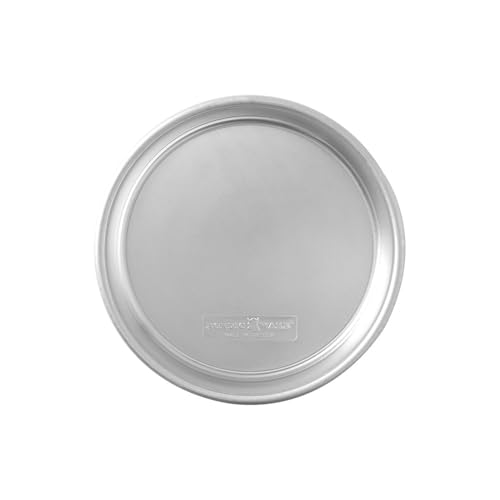
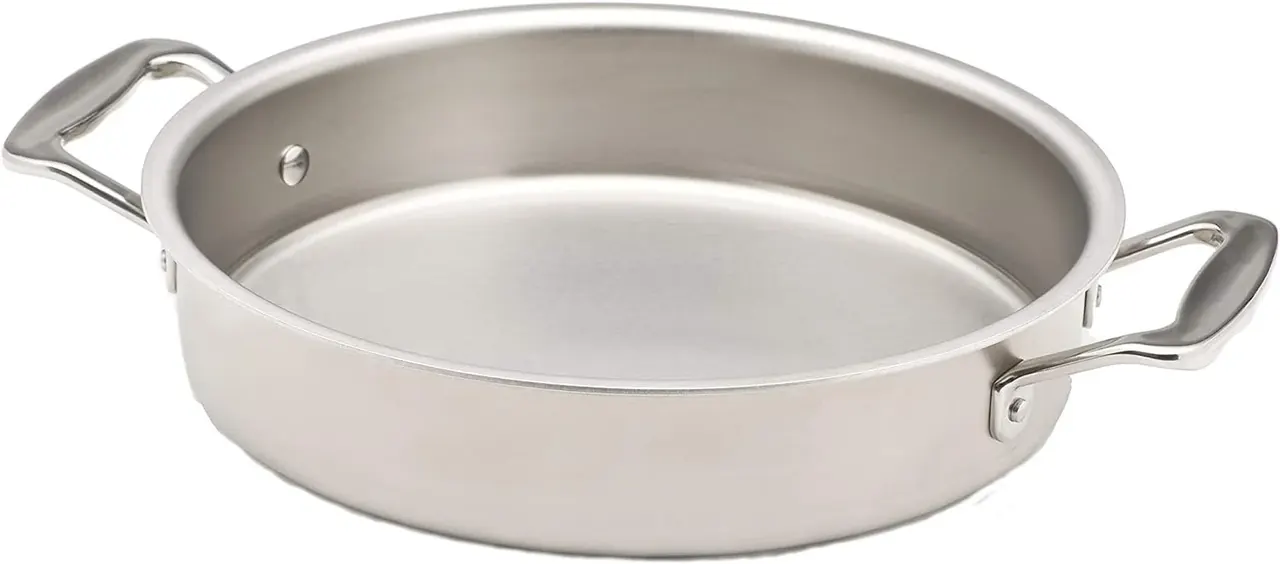
If I want the most predictable cake layers with even browning, I reach for anodized aluminum. If my first concern is easy release, especially for sticky batters or detailed shapes, PTFE nonstick is the simpler choice. In practice, anodized aluminum usually bakes a little more evenly, while nonstick makes turn-out and cleanup easier, and parchment helps both.
How They Bake
The biggest difference is not that one pan can bake cake and the other cannot. Both can. What changes is how quickly the edges set, how deeply the crust browns, and how much help the cake gets when it is time to come out of the pan.
Anodized aluminum is still aluminum at heart, so it responds well to oven heat and tends to give steady, even baking. Because it is usually lighter in color than many nonstick pans, it often produces a gentler crust around the sides and bottom. That is useful for layer cakes, where I want clean edges and a level crumb instead of dark, slightly overdone corners.
PTFE nonstick refers to the coating, not the core metal underneath. Many nonstick cake pans are aluminum with a coated surface. The coating itself, along with a darker finish that often comes with it, can encourage faster browning. That does not automatically make it worse. It just means I watch the cake a little more closely near the end of baking.
Pan thickness matters too. A sturdy pan of either type will usually bake better than a thin, flimsy one. Thin pans are more likely to brown too quickly on the bottom, especially on a lower rack. I keep cake pans on the center rack and treat color and construction as part of the story, not just the label on the pan.
Release Matters More Than Most Bakers Think
Nonstick has a clear advantage when release is the priority. For a delicate cake, a sticky fruit batter, or a pan with lots of curves, the coating gives a little extra insurance. But I still would not treat nonstick as a free pass to skip preparation.
Even with a coated pan, sugar can cling, fruit can catch, and tender crumbs can tear. A parchment round on the base is still one of the most useful habits I know for layer cakes. Wilton’s cake-baking guidance makes the same point: parchment is a practical release tool, not an optional extra when the cake really matters.
With anodized aluminum, proper prep is what closes the gap. A light coating of butter, shortening, or baking spray plus parchment on the bottom usually makes release very reliable. For standard round cakes, that combination often gives me the best balance of clean release and even color.
Which Pan Suits Which Cake
For classic butter cakes, yellow cakes, and most layer cakes, anodized aluminum is usually my first pick. It gives defined edges, moderate browning, and a structure that is easy to level and stack.
For sticky batters, fruit-heavy cakes, or shapes with many grooves, nonstick is often the safer choice. A coating can reduce the force needed to unmold the cake, which matters when the crumb is delicate or the design needs to stay neat.
Sponge, chiffon, and angel food cakes are the exception that makes this whole comparison clearer. These cakes often need the batter to grip the sides of the pan as it rises. A slick nonstick surface can work against that. An uncoated-style baking surface is generally the better fit when the recipe depends on climb and structure rather than easy release.
Chocolate cakes can go either way. I tend to favor aluminum when I want to monitor browning more easily, but nonstick can be helpful for soft, cocoa-rich batters that like to cling. If I flour the pan for chocolate cake, I prefer cocoa over white flour so the outside stays dark and clean-looking.
What Anodized Aluminum Changes
Anodized aluminum is worth separating from plain untreated aluminum because the surface is more stable and nonreactive. That makes it a good choice for cakes with acidic ingredients like fruit, yogurt, or buttermilk, without the concern that bare aluminum can sometimes raise in flavor or color discussions. General cookware guidance on aluminum finishes notes that anodizing helps limit direct reactivity with food; this overview of aluminum finishes gives useful background.
It also tends to be a practical long-term baking material. It is light, easy to handle, and usually simple to maintain as long as it is hand washed and not shocked with sudden temperature changes. I would not put it in the dishwasher, even if a maker suggests it can tolerate more than plain aluminum. Hand washing is the gentler route.
Care and Oven Use
Both anodized aluminum and PTFE nonstick are fairly easy to maintain, but they need slightly different habits.
With nonstick, the main rule is to protect the coating. I avoid metal utensils, cutting in the pan, and abrasive scrubbers. If the surface becomes scratched, blistered, or starts to peel, it is time to stop using that pan. Nonstick coatings also come with more limited oven tolerance than plain metal pans, so I stick to the manufacturer’s temperature guidance and avoid high-heat misuse.
With anodized aluminum, I focus more on preserving shape and finish. I let the pan cool before washing, keep it out of the dishwasher, and store it flat so the base does not warp. A bent pan can bake unevenly even if the material itself is otherwise fine.
Food Network’s guidance on cake pan testing also reflects a pattern many bakers already know: lighter aluminum pans are often favored for consistent cake results, while coated pans are helpful where release is the harder problem to solve. You can see that reflected in their cake pan comparison coverage.
Mistakes That Cause More Trouble Than the Pan Material
Most disappointing cakes come from prep and timing, not from choosing the wrong surface.
The first mistake is treating dark nonstick exactly like light aluminum. If the pan is darker, the edges may brown sooner. I start checking a few minutes early rather than assuming the full recipe time will be perfect.
The second is overgreasing. Too much fat can make the sides fry, slide, or turn greasy. I want a thin, even coating, not puddles in the corners. This matters in nonstick pans especially, where excess grease can work against the texture I want.
The third is turning the cake out at the wrong moment. Too early and the crumb can collapse or tear. Too late and sticky sugars may cool firmly against the pan. A short rest, then loosening the edges and inverting onto a rack, is usually the sweet spot.
The fourth is skipping parchment when the cake matters. I know it can feel like one extra step, but it solves a lot of problems before they start.
Finally, I do not assume all pans with the same diameter behave the same way. Depth, wall shape, thickness, and finish all affect baking. As general cake-pan material guidance points out, construction is part of performance.
FAQ
Is anodized aluminum better than nonstick for cake pans?
For even baking and dependable layers, I would choose anodized aluminum first. For easy release, especially with sticky or fragile cakes, nonstick is usually the easier option.
Do cakes bake more evenly in aluminum or nonstick pans?
Usually in a light-colored aluminum pan. Darker nonstick pans can brown the edges and bottom faster, so they sometimes need closer timing.
Are anodized aluminum cake pans safe for baking?
Yes. Anodized aluminum is commonly used for bakeware, and its surface is nonreactive compared with untreated aluminum. I still use normal care: hand washing, avoiding warping, and using the pan as directed.
Do I still need to grease a nonstick cake pan?
Usually, yes. A light coating and parchment on the base give more reliable release than relying on the coating alone, especially for sugary or delicate cakes.
Which pan is better for layer cakes?
If appearance and even layers matter most, anodized aluminum is usually the stronger choice. It tends to give cleaner edges and more even browning, and parchment handles the release side of the job.
The Bottom Line
Anodized aluminum is my pick for the best all-around cake baking because it tends to give more even color and more predictable structure. PTFE nonstick earns its place for sticky batters, detailed shapes, and easier release, but I still prep it carefully and treat the coating gently.
 Best Overall
 Best Nonstick (PTFE) Set
 Best Nonstick (PTFE) Pick
 Best Value
 Also Great