From This Page
Aluminum (Anodized) vs Stoneware for a loaf pan: heat retention, maintenance, induction compatibility, and which jobs each wins.
| Attribute | Aluminum (Anodized) | Stoneware |
|---|---|---|
| Heat retention | Fair | Excellent |
| Maintenance | Easy | Easy |
| Induction compatible | Varies | No |
| Oven safe | Yes | Yes |
| Dishwasher safe | No | Varies |
| Weight | Light | Heavy |
| Price tier | Budget | Mid |
| Reacts with acidic food | No | No |
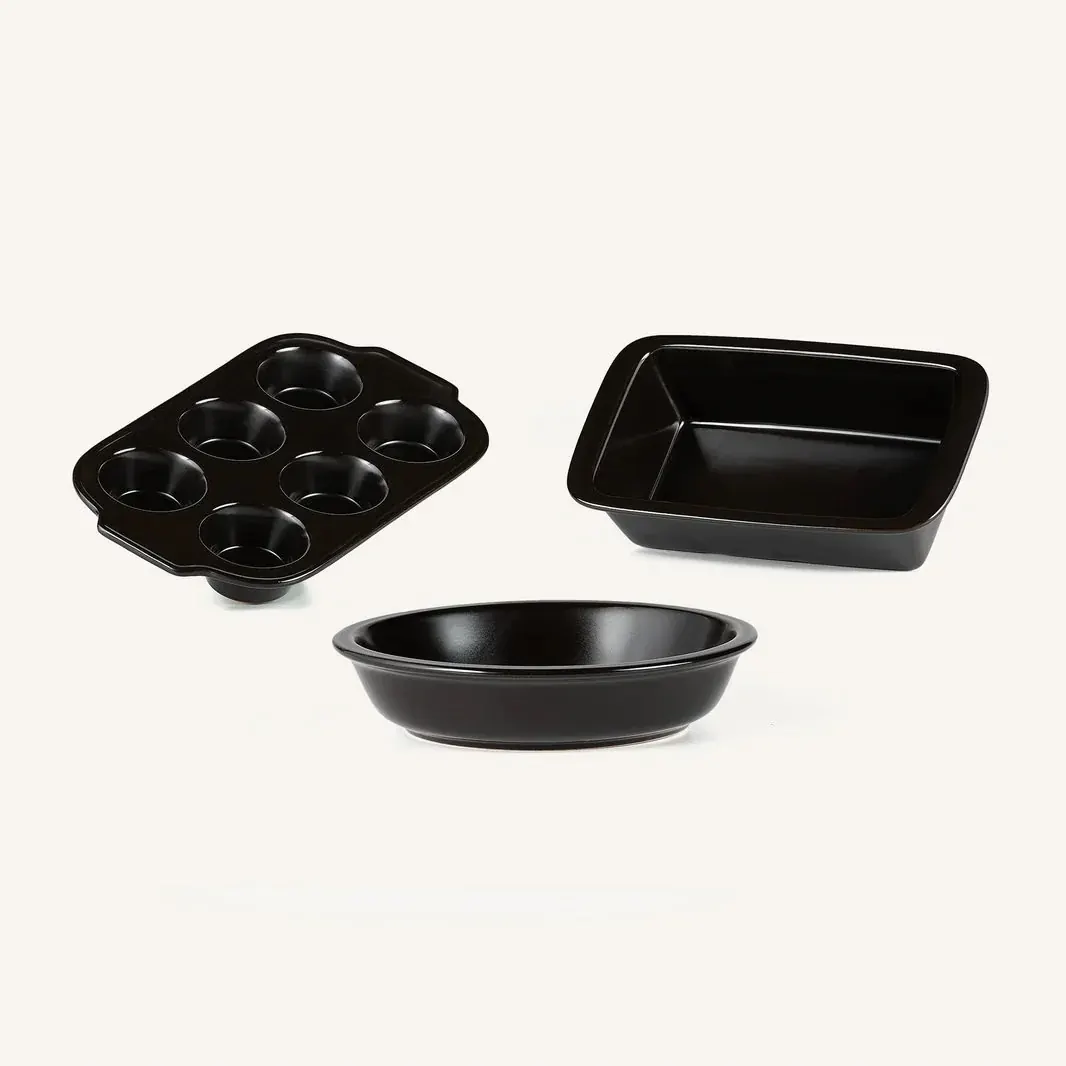
If I’m choosing between an anodized aluminum loaf pan and a stoneware loaf pan, I’d pick anodized aluminum for most everyday baking. It heats faster, bakes more predictably, and usually matches loaf recipes written for standard metal pans with fewer adjustments. Stoneware still has a place, especially if I want gentler heat and a pan that stays warm for serving, but it asks for a little more patience.
The biggest difference is heat behavior. Anodized aluminum responds quickly as soon as it goes into a hot oven, so the loaf starts setting and browning sooner. Stoneware warms more slowly, then holds onto that heat for longer. In practice, that means aluminum tends to give clearer timing cues, while stoneware often needs extra time and a closer eye at the end.
This general pattern lines up with broad bakeware guidance from bakeware material overviews: metal conducts heat efficiently, while ceramic-style materials like stoneware heat more gradually and retain warmth well. I treat that as a useful starting point, not a rigid rule, because pan thickness, color, and oven accuracy still matter.
Anodized aluminum also avoids the reactivity concerns associated with plain untreated aluminum, so acidic batters like lemon loaf or fruit-heavy quick breads are usually less of a question here than they would be with bare aluminum.
With anodized aluminum, I expect stronger browning on the sides and bottom, plus a loaf that follows the recipe timing more closely. That’s especially helpful for sandwich bread, pound cake, and quick breads I make often enough to know by sight.
Stoneware often gives a gentler start. The crust may look lighter at first, even while the loaf is still baking steadily inside. Because the pan retains heat so well, the sides and bottom can continue cooking late in the bake and even during the first minutes of cooling.
This is where bakers sometimes get tripped up. A loaf in stoneware can look done on top before the center is actually ready. A loaf in anodized aluminum can brown too quickly on the edges if the oven runs hot or the pan sits too close to a strong heating element.
My usual approach is simple: start with the recipe’s stated oven temperature, check early, and judge doneness at the center. A skewer, toothpick, or gentle springback tells me more than crust color alone.
For banana bread, pumpkin bread, and other dense batters, anodized aluminum is the easier pan to read. The edges set sooner, the loaf colors well, and the bake time is usually more straightforward. The risk is pulling it too soon because the crust looks finished before the center is fully baked.
Stoneware can be very nice for moist quick breads if I want a slightly softer exterior and a loaf that stays warm on the table. I just plan for more time and resist making a doneness call by appearance alone. For sticky or fruit-heavy batters, I’m extra careful with greasing and parchment.
For sandwich bread and enriched doughs, I lean toward anodized aluminum. Fast heat transfer helps the sides set neatly, which supports a consistent shape. If I’m baking from a standard loaf-pan recipe, this is the material least likely to need much adjusting.
Stoneware can still bake good yeast bread, but I expect a slower start. That can be fine, though I watch the loaf’s center rather than assuming it’s ready once the top has browned. If the crust darkens before the interior finishes, a loose foil tent usually solves the problem.
Neither pan material guarantees easy release. Good prep matters more than the name of the pan.
For anodized aluminum, I grease the bottom, sides, and corners thoroughly. If the batter is sugary, sticky, or packed with fruit, I line the pan with parchment too. A parchment sling is especially helpful for quick breads that can crack if I try to tip them out too aggressively.
Stoneware deserves the same care. Even if the interior is glazed and smooth, I still grease it well. Glaze can help with cleanup, but it is not a substitute for pan prep.
I also avoid relying on flour alone for wet batters. It can leave pale patches and still fail where caramelized sugar wants to cling.
For most quick breads, I let the loaf cool in the pan briefly so the structure can firm up, then loosen the edges and turn it out carefully. For yeast bread, I usually remove it sooner so trapped steam doesn’t soften the sides.
Stoneware needs a little extra respect here because it stays hot longer and is heavier to handle. I use both hands, a steady surface, and a rack that’s already in place before I invert anything. If the loaf resists, I stop and loosen the corners again instead of forcing it.
Anodized aluminum is usually the easier everyday option. It’s light, simple to wash by hand, and less awkward to move around a crowded kitchen. I would not count on the dishwasher, since many aluminum pans do better with hand washing, and harsh cycles can wear finishes over time.
Stoneware is also fairly easy to maintain, but it needs gentler handling for a different reason: thermal shock. I don’t move a hot stoneware pan onto a cold surface or expose it to sudden temperature swings unless the maker specifically says it can handle that. That’s the quickest path to cracks or chips.
Guidance from the FDA on safe food handling is mostly about food rather than bakeware, but one habit crosses over well: avoid damaged food-contact surfaces. If a coating is compromised or stoneware is badly chipped or cracked, it’s worth replacing rather than working around it.
In anodized aluminum, this usually points to oven temperature or pan placement. I lower the temperature slightly next time, or move the pan farther from an aggressive top or bottom element. In stoneware, it can simply mean the loaf needs more time than I expected.
This is more common with stoneware. I keep baking until the center tests done, and if the top is getting too dark first, I tent it loosely with foil. An oven thermometer can help sort out whether the issue is really the pan or just an inaccurate oven. The King Arthur Baking note on oven thermometers is a good reminder that home ovens are often less exact than their dials suggest.
This often happens when the loaf sits in the pan too long after baking. Cooling on a rack matters. With stoneware in particular, retained heat and steam can keep softening the crust if I leave the loaf in place too long.
I come back to two fixes: better greasing and parchment. If I know a recipe runs sticky, I don’t gamble on a clean release.
If I were keeping just one loaf pan, anodized aluminum would be the practical pick. It’s light, oven-safe, easy to maintain, and generally more forgiving when I’m following standard loaf recipes. It also tends to be the more budget-friendly option.
Stoneware makes more sense if I care about heat retention, like serving from the pan, or simply prefer the feel of a heavier vessel. It’s oven-safe too, but not induction-compatible, and it asks for more attention around preheating, bake time, and thermal shock.
For many kitchens, the real answer is not that one is better in every case. It’s that anodized aluminum is the easier worker, and stoneware is the more particular one.
I usually prefer anodized aluminum for banana bread because the timing is easier to predict and the loaf develops better edge browning. Stoneware can work well too, but I plan on a longer bake and check the center carefully.
Often, yes. Stoneware heats more slowly than anodized aluminum, so many loaves need extra oven time. I go by doneness in the center instead of relying on the recipe clock.
For most yeast loaves, I’d choose anodized aluminum. It gives faster heat response and more predictable structure and crust development, especially for sandwich bread.
Yes. A glaze may help with release and cleanup, but it doesn’t replace greasing. For sticky quick breads, parchment is helpful too.
Anodized aluminum is generally chosen in part because it is less reactive than bare aluminum. For acidic ingredients like citrus, yogurt, or fruit, that makes it a more comfortable choice than untreated aluminum.
Anodized aluminum is the better all-around loaf pan for predictable baking, stronger browning, and easier everyday handling. Stoneware is worthwhile when I want gentle heat and lasting warmth, but it usually needs more patience and a closer eye.
This page contains affiliate links. If you buy through them, Stripes & Willows may earn a commission at no extra cost to you — it never affects what we recommend.