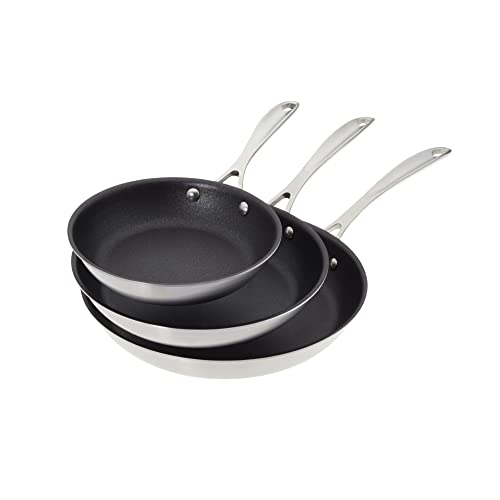
If I had to give one short answer, it’s this: carbon steel is the better long-term skillet for cooks who want durability, high heat, and strong browning, while a PTFE nonstick skillet is the easier choice for eggs, pancakes, and other delicate foods. In most real kitchens, these pans are not perfect substitutes for each other. One asks for a little care and technique; the other asks for gentler heat and a lighter touch.
How They Cook Differently
The biggest difference is the cooking surface itself. Carbon steel is bare metal that becomes more release-friendly as seasoning builds. PTFE nonstick starts out slick from day one because the release comes from the coating, not from a seasoning layer you create over time.
That changes how each pan behaves in everyday cooking. Carbon steel responds well to high heat and can handle the kind of cooking that depends on a good sear: chicken thighs, burgers, blistered vegetables, fried rice, quick stir-fries. PTFE nonstick is better kept at low to medium heat, where it shines with fragile foods that like to cling: eggs, omelets, crepes, pancakes, and tender fish.
Carbon steel also tends to feel more like a workhorse. It has good heat retention, can usually go into the oven, and works on induction. PTFE nonstick is typically lighter and easier to manage one-handed, but oven use is more limited and induction compatibility depends on how the pan is built.
When Carbon Steel Makes More Sense
I like carbon steel most for cooks who want one pan that can take regular use and improve with time. It rewards a little attention. Once the seasoning is established, the pan becomes easier to use and far more forgiving than many people expect.
This is the pan type I’d choose for high-heat searing, fast sautés, and any cooking where browning matters. It’s also a practical choice if you prefer using metal spatulas or want a skillet that can be scrubbed, dried, oiled, and brought back into shape instead of replaced at the first sign of wear.
Its trade-off is maintenance. Carbon steel needs seasoning, should not be left wet, and can react with acidic ingredients like tomatoes, vinegar, citrus, or wine, especially during longer cooking. A quick pan sauce is one thing; a long simmering tomato dish is another. For that reason, I don’t think carbon steel is the easiest only skillet for every cook.
When PTFE Nonstick Makes More Sense
PTFE nonstick is about ease. If the meal starts with eggs in the morning or a quick fish fillet at dinner, it’s hard to argue with a pan that releases food cleanly without much thought. Cleanup is usually simple, and there’s no seasoning routine to learn.
That convenience is exactly why many cooks keep one around even if they own heavier-duty pans. It does one job especially well: helping delicate food release without sticking or tearing. For lower-fat cooking, it can also be useful because less oil is often needed to get food moving.
The downside is lifespan. A nonstick coating is not something you can truly restore once it is significantly worn or scratched. As this cookware comparison notes, carbon steel and nonstick tend to age in opposite ways: carbon steel can often be refreshed, while nonstick usually performs best earlier in its life.
The Learning Curve Is Real
Most frustration with carbon steel comes from technique, not from the pan being defective. A new or lightly seasoned pan may stick if it hasn’t been preheated properly, if too little fat is used, or if food is moved before it naturally releases. Eggs are usually the test case that exposes all of those mistakes at once.
Preheating matters more with carbon steel than many people expect. I think of it as a pan that wants a minute of patience up front. Heat it gradually, let the surface warm evenly, then add oil. That short routine helps with sticking and reduces the chance of hot spots or warping.
With PTFE nonstick, the common mistake runs in the opposite direction: too much heat. It’s easy to treat every skillet as if it should be preheated empty over a strong burner, but nonstick is not built for that kind of use. Guidance like this is consistent with standard care advice: keep PTFE nonstick to lower or moderate heat unless the manufacturer specifically says otherwise, and don’t leave it heating empty for long stretches.
Care and Cleaning
Carbon steel maintenance sounds fussy until you do it a few times. After cooking, wash the pan with hot water and a soft brush or non-abrasive scrubber. Dry it right away. Then warm it briefly to drive off any remaining moisture and wipe on the thinnest film of oil. That simple routine does more for long-term performance than any complicated seasoning ritual.
The most common carbon steel mistake is using too much oil when seasoning. A visible layer of oil doesn’t create a better finish; it often creates a sticky one. The goal is a very thin coat that bonds to the surface, not a glossy residue sitting on top. A good carbon steel care guide makes the same point: thin layers, complete drying, and rust prevention matter more than overdoing it.
PTFE nonstick is lower maintenance, but it still benefits from some restraint. Let it cool enough to handle safely before washing, use a soft sponge, and skip abrasive cleaners or scouring pads. I’d also avoid stacking it carelessly against rough pan bottoms unless there’s some protection between them. The coating is the whole point of the pan, so protecting it is part of basic upkeep.
Neither pan belongs in the dishwasher if you want the best lifespan. Carbon steel can rust and lose seasoning, and nonstick coatings generally fare better with gentler hand washing.
Safety and Everyday Practicality
For most home cooks, the safety conversation is mainly about using each material as intended. Carbon steel gets very hot and stays hot enough to cause a quick burn, including the handle. It also reacts with acidic foods, which is more of a cooking-performance issue than a reason to avoid the material outright for ordinary use.
PTFE nonstick is straightforward when it’s used within its temperature limits and the coating is kept intact. If the coating becomes peeling, flaking, or deeply scratched, it’s time to replace the pan rather than keep pushing it. The coating is not something seasoning can fix.
One practical way to think about the choice is this: carbon steel asks for a little more attention at the sink and stove, while PTFE nonstick asks for more caution around heat and utensils.
Who Should Choose Which
If you love hard sears, crisp edges, oven finishing, and a pan that can last for years with care, carbon steel is the stronger fit. It’s especially useful for cooks who don’t mind a bit of routine and like cookware that becomes more personal with use.
If you want breakfast to go smoothly, want the easiest cleanup, or simply do not want to think about seasoning, PTFE nonstick is probably the better fit. There’s nothing lesser about choosing the pan that matches how you actually cook.
And if you have the space, keeping both is often the most sensible answer. As many side-by-side comparisons point out, they serve different jobs well. I’d rather let each pan do what it’s best at than force one material to cover every situation.
FAQ
Which is better for everyday cooking: carbon steel or PTFE nonstick?
It depends on what “everyday” looks like in your kitchen. For eggs, pancakes, and delicate foods, PTFE nonstick is easier. For searing, sautéing, and higher-heat dinners, carbon steel is more versatile and durable.
What are the downsides of a carbon steel skillet?
Carbon steel needs seasoning, must be dried well to prevent rust, and can react with acidic foods. It also takes a little practice to get the best food release, especially with eggs or fish.
Can carbon steel become as nonstick as PTFE?
A well-seasoned carbon steel pan can become very release-friendly, but it does not behave exactly like a fresh PTFE nonstick coating. It usually needs better preheating and a bit more technique, especially for delicate foods.
When should a PTFE nonstick skillet be replaced?
It should be replaced when the coating is peeling, flaking, deeply scratched, or no longer releasing food reliably. Once the coating is damaged, there isn’t a true way to restore it.
Is carbon steel safe to cook with?
For general home cooking, carbon steel is widely considered safe when it’s maintained properly. Because it can react with acidic foods and may transfer small amounts of iron, it makes sense to avoid long acidic simmers in it and follow medical guidance if iron intake is a concern.
The Bottom Line
Carbon steel is the better all-around workhorse if you want longevity, high-heat performance, and a pan that can be maintained instead of discarded. PTFE nonstick is the simpler specialist for delicate foods and quick cleanup, and many kitchens are best served by using both for what each does best.
 Best Carbon Steel Pick
 Best Nonstick (PTFE) Pick