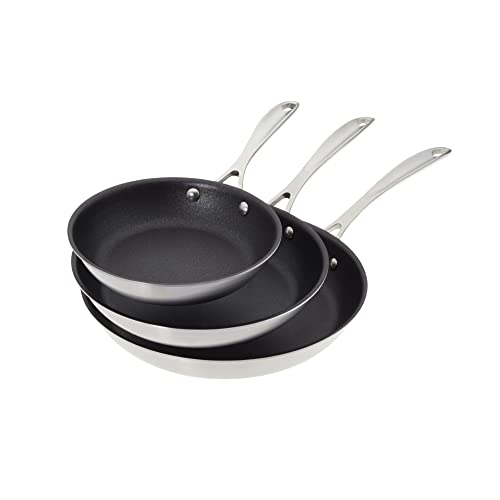
If I had to choose just one skillet for a wide range of cooking, I would pick tri-ply stainless steel. It handles browning, searing, pan sauces, oven finishing, and daily wear better than PTFE nonstick. But if I cook a lot of eggs, delicate fish, pancakes, or quick low-mess meals, a nonstick skillet earns its spot fast. In a real kitchen, stainless steel is the workhorse and nonstick is the specialist.
How They Cook Differently
The biggest difference is the surface that touches the food. Tri-ply stainless steel has an uncoated steel interior, usually with an aluminum core layered inside for more even heating. PTFE nonstick has a slick coating over a metal body, and that coating changes how food releases, how much fat I need, and how far I can push the heat.
Stainless steel is the pan I want when I need strong contact between the food and the surface. That contact helps build browning and fond, the flavorful browned bits left behind after cooking meat or vegetables. Fond is what turns into a good pan sauce once I add wine, stock, or even a splash of water and scrape it up.
Nonstick is built for the opposite job. It is meant to reduce sticking, which is exactly why it is so helpful for fragile foods. The trade-off is that I get less fond and less aggressive browning.
Construction matters too. A well-made tri-ply stainless skillet usually heats more evenly and holds heat better than a thin pan, which is part of why it performs so well for searing. PTFE pans often heat quickly and feel lighter in the hand, but they are better treated as moderate-heat pans. As Martha Stewart’s cookware guide points out, the right pan really depends on the task.
When Stainless Steel Wins
I reach for stainless steel when color and flavor matter most. Chicken thighs, pork chops, mushrooms, onions, cutlets, and sturdy vegetables all benefit from a hot stainless surface. It gives me a better chance at a real crust instead of pale, steamed food.
It is also the better choice when I want to move from stovetop cooking into sauce-making. After browning, I can deglaze the pan and turn those browned bits into something useful. Nonstick can cook the food, but it does not give me the same base for a pan sauce.
Tri-ply stainless also makes more sense if I want one skillet that can do more over time. It usually tolerates oven use better than PTFE nonstick, and it is often induction compatible. It does not react with acidic ingredients, so tomatoes, wine, and lemon are all fine in the pan.
The catch is technique. Stainless steel rewards patience. I preheat it gradually, add oil after the pan is warm, and let the food sit long enough to release naturally. If I poke and flip too early, sticking is much more likely.
When Nonstick Wins
PTFE nonstick is the easy answer for eggs, omelets, crepes, pancakes, tofu, and flaky fish. These are the foods that benefit from a slick surface and gentler heat. I do not need to manage the timing as carefully, and I usually need less fat for clean release.
It is also useful on rushed mornings or on nights when cleanup needs to be simple. A nonstick skillet is lighter, usually easier to maneuver with one hand, and often less fussy for small jobs.
That convenience does come with limits. Nonstick is not the pan I want for high-heat searing, broiler use, or rough handling. PTFE coatings work best when I keep the heat moderate and avoid the kind of cooking that depends on intense surface heat. This lines up with the practical care guidance in Prudent Reviews’ comparison and broader cookware advice from surface-focused guides like this one.
Heat, Browning, and Release
A lot of frustration with both pans comes down to heat control, not the material itself.
With stainless steel, I want enough heat to encourage browning, but not so much that oil scorches instantly. A medium to medium-high preheat is usually more useful than blasting the burner from the start. Once the pan is properly heated and the oil shimmers, food is more likely to brown well and release when ready.
With nonstick, I think in the opposite direction. Moderate or even medium-low heat is usually plenty. An empty PTFE pan can overheat quickly, especially because the surface releases so easily that it can tempt me to treat it like an all-purpose high-heat skillet. It is not. If I need an aggressive sear, stainless is the safer bet.
Care and Longevity
Tri-ply stainless steel is more forgiving in daily use. It can handle a wider range of utensils, including metal in many cases, and surface scratches usually do not affect performance much. It may discolor or pick up water spots, but that is mostly cosmetic. Because there is no applied nonstick coating, there is nothing to wear away in the same way.
PTFE nonstick needs gentler handling. I stick to softer utensils, avoid abrasive scrubbers, and skip high heat. If the coating becomes peeling, deeply scratched, or noticeably poor at releasing food, it is time to replace the pan.
Cleaning is straightforward for both, just in different ways. Nonstick usually washes easily with warm soapy water and a soft sponge. Stainless steel can take a bit more work after searing, but stuck-on bits are rarely the end of the story. A soak, a short simmer with water, or a little baking soda usually solves most residue without much drama.
Dishwasher use is another place where the two split. Stainless steel is generally dishwasher safe, though I still think hand-washing keeps it looking better. PTFE nonstick is better off washed by hand if I want to be as gentle as possible with the coating.
Common Mistakes I See Most Often
Using too much heat on nonstick
This is the fastest way to shorten the life of a PTFE skillet. Nonstick does not need ripping heat for most of the jobs it does best, and preheating it empty over high heat is especially hard on the coating.
Not giving stainless steel time to preheat
Cold food in a barely warmed stainless pan is a reliable way to get sticking. Stainless usually performs better when I let the pan heat first, then add oil, then add dry food.
Crowding the pan
This matters with both surfaces, but especially with stainless steel. Too much food at once drops the pan temperature and traps steam, so food softens instead of browning.
Expecting one pan to do every job
This is really the heart of the stainless-versus-nonstick question. Stainless is not the easiest egg pan, and nonstick is not the best searing pan. If I match the pan to the task, both work better and last longer.
Which One Makes More Sense for Most Kitchens?
If I am building a kitchen from scratch and can only start with one skillet, tri-ply stainless steel is the smarter foundation. It is more versatile, more durable, usually oven safe, and often compatible with more cooktops, including induction.
If I already have a good stainless skillet and want to make daily cooking easier, a small or medium PTFE nonstick pan is the useful add-on. That pairing covers almost everything I cook at home without forcing one surface to handle jobs it is not built for.
FAQ
Which is better for everyday cooking: stainless steel or nonstick?
For overall versatility, stainless steel is better. It handles sautéing, searing, sauces, and oven use more comfortably. Nonstick is better for easy-release foods and quick cleanup.
Is nonstick cookware healthier than stainless steel?
Neither is automatically healthier in every situation. Modern PTFE cookware is made without older PFOA chemistry, but it still needs sensible heat use and replacement when damaged. Stainless steel avoids coating wear and is a straightforward choice for higher-heat cooking.
Do professional cooks prefer stainless steel or nonstick?
Many rely heavily on stainless steel for browning, deglazing, and repeated high-use cooking. Nonstick still has a clear role for eggs, fish, and other delicate foods. The choice usually follows the job.
Can I cook eggs in stainless steel instead of nonstick?
Yes, but it takes more attention. I need proper preheating, enough fat, and patience before moving the eggs. Nonstick is simply easier and more forgiving.
The Bottom Line
Tri-ply stainless steel is the better all-around skillet, especially if I value browning, durability, and flexibility. PTFE nonstick is still worth having for delicate foods and low-fuss cooking. If I can keep both in the kitchen, I do not have to compromise nearly as often.
 Best Stainless Steel (Tri-Ply) Pick
 Best Nonstick (PTFE) Pick