From This Page
 Also Great
Recommended by Stripes & Willows

 Also Great
Also Great
Also Great
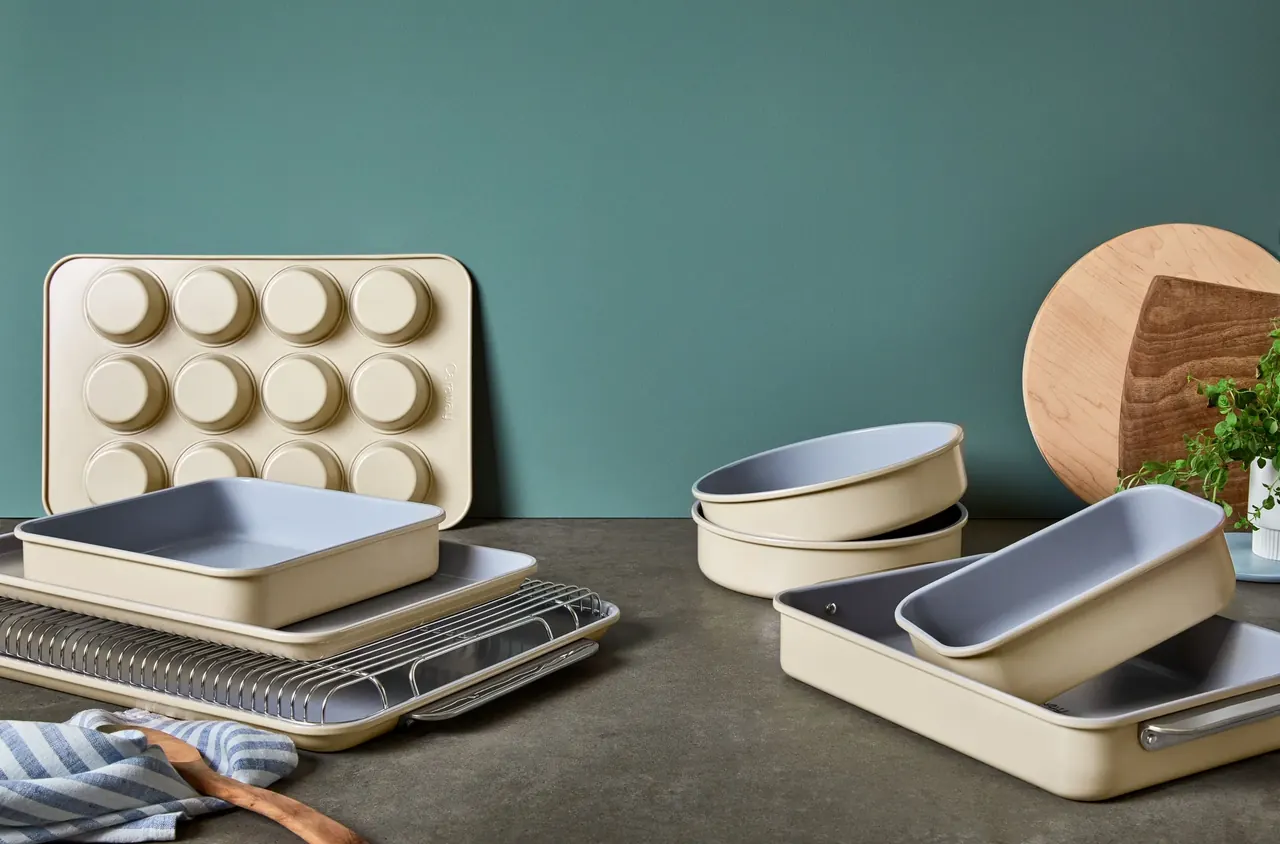
The best bakeware to give as Christmas gifts is the kind that matches how someone actually bakes. If I’m choosing for a home baker, I’d rather give one sturdy, useful pan in the right size and material than a decorative piece that only comes out once a year. The most thoughtful gifts fit their usual recipes, their oven, their storage space, and the amount of care they’re realistically willing to give a pan.
I start with habits, not holiday packaging. A person who bakes cookies every weekend needs something very different from someone who makes pies in November and quick breads the rest of the year.
For beginners, I like versatile basics: a rimmed sheet pan, muffin pan, loaf pan, or round cake pans. Those shapes cover a lot of ground and don’t ask much in return. For more experienced bakers, I look for a gap in their kitchen. If they already bake layer cakes often, a reliable straight-sided cake pan may make more sense than another sheet pan. If they make breads and rolls, a loaf pan or deeper baking dish may be the better call.
I also think about the kitchen itself. Large pans can be awkward in compact ovens, and tall specialty pieces take up more cabinet room than most people expect. Standard sizes are usually the safest choice because recipes are written around them, and they’re simply easier to live with.
If I want a practical gift for someone who bakes cakes, cookies, bars, or pastries regularly, this is usually where I start. Aluminum heats quickly and tends to bake evenly, which helps with consistent browning. Aluminized steel adds strength, so it can be a smart choice for pans that will see frequent use.
Weight matters here. Thin pans are often more likely to flex or warp under high heat, while heavier-gauge construction generally feels steadier and lasts longer. That doesn’t mean every heavy pan is better, but flimsiness is rarely a gift.
I’m also careful with acidic recipes. Bare aluminum can react with some highly acidic ingredients during prolonged contact, so it’s worth checking the maker’s guidance before using it for certain fillings or bakes.
For a baker who wants an everyday workhorse, metal bakeware is hard to beat. It’s practical, widely useful, and usually the easiest place to start if you’re not completely sure what they already own.
Glass and ceramic make especially good gifts for bakers who love pies, cobblers, bread puddings, crisps, and oven-to-table desserts. They heat more gradually than metal and hold heat longer, which can be useful for dishes that are served straight from the pan.
Glass has one clear advantage: you can often see browning along the sides and bottom more easily. Ceramic, on the other hand, often feels a bit more giftable because it doubles as serving ware. For someone who brings a baked dish to the table or to a holiday gathering, that matters.
These materials do ask for a little more care. I never assume baking times will match metal exactly, and I don’t make automatic temperature changes without checking recipe and manufacturer guidance first. I’m also careful about thermal shock. A hot dish placed on a cold or wet surface, or rinsed too soon under cold water, can be stressed by the sudden change in temperature.
For holiday bakers and pie makers, this category makes a lot of sense, especially when presentation matters as much as the bake itself.
Silicone and nonstick pieces can be very useful, but I think they work best as targeted gifts rather than default ones. Silicone is helpful for delicate molds, muffins, and smaller cakes because release is easy and storage is simple. The trade-off is that it’s flexible, so it often needs the support of a sheet pan underneath.
Nonstick surfaces can make cakes, bars, and sticky bakes easier to unmold and easier to clean. That said, coatings need gentle treatment. I’d only give this kind of bakeware to someone who doesn’t mind following basic care instructions: approved utensils, no abrasive scrubbers, and attention to the stated temperature limit. If a coating becomes scratched or damaged, it’s time to retire the pan.
As a gift, this category works well when you know the person will appreciate easy release more than they value a bare-metal or ceramic piece.
Once I know the material, I think about shape. The best shape is usually the one that supports the recipes they make on repeat.
For cookie bakers: a sturdy rimmed sheet pan is one of the most useful gifts in any kitchen. A rim helps with handling and keeps parchment or liners in place.
For cake bakers: round or square cake pans, a loaf pan, or a tube-style pan all make sense, depending on what they bake most.
For muffin and cupcake bakers: a muffin pan is more versatile than it looks. It’s useful for breakfast bakes, mini desserts, and savory egg dishes too.
For bread bakers: loaf pans and straight-sided baking dishes are reliable choices for sandwich loaves, quick breads, rolls, and pull-apart breads.
For pie and tart bakers: a deep pie dish or tart pan with a removable bottom can be genuinely useful, especially if that’s already part of their holiday routine.
I like the general advice in the Williams Sonoma baker gift guide: the best baking gifts support the tasks someone already enjoys. That applies to bakeware more than almost anything else.
A good bakeware gift is usually decided by small details.
Rimmed edges make sheet pans easier and safer to carry. Handles on glass or ceramic dishes are helpful, but only if they’re easy to grip with oven mitts. Pan depth matters too. A shallow pan is right for bars and cookies, while a deeper pan is better for cakes, casseroles, and some pies.
I also pay close attention to dimensions. Labels like small, medium, and large don’t tell me much. Recipe compatibility comes down to actual measurements. A pan that’s too small can overflow; one that’s too large can leave baked goods thin or dry.
If I’m giving a set, I want the pieces to work together without duplicating each other. A compact, useful group of standard sizes is much more thoughtful than a bulky collection that fills a cabinet and solves no real problem.
Good bakeware should be easy enough to live with. A pan that performs well but asks for fussy care may not be the right gift for every baker.
With metal, I look for construction that feels sturdy enough to resist warping under normal use. I also pay attention to heat limits and any guidance around broilers or other high-heat settings. “Oven-safe” is not a complete instruction.
With glass and ceramic, I’m extra cautious about sudden temperature changes. The same goes for cleaning: I’d rather soak baked-on residue with warm water and mild soap than scrape aggressively and damage the surface.
For coated pans, softer utensils and non-abrasive cleaning tools help preserve the finish. Even if a manufacturer says dishwasher-safe, gentler washing may help the surface last longer. Guidance from Good Housekeeping on cleaning baking sheets lines up with this general approach: milder cleaning methods are usually the safer long-term choice.
When stacking pans, a simple separator helps prevent scratches. It’s not glamorous, but it does keep bakeware in better shape.
The biggest mistake is choosing novelty over usefulness. A festive shape can be charming, but if it only suits one recipe in December, it may spend the rest of the year in the back of a cabinet. If I’m tempted by seasonal bakeware, I still ask one practical question: will they use it after the holiday?
The second mistake is ignoring weight and handling. A very heavy dish may bake beautifully but be hard to lift when full. A very lightweight pan may store easily but warp more readily. Good gifting sits in the middle of performance, durability, and comfort.
The third mistake is forgetting that materials bake differently. Moving from metal to glass or ceramic can change timing and browning, so a gift should come with clear care information. The FDA’s food handling guidance is a helpful reminder that safe kitchen habits matter as much as the pan itself, especially when hot dishes are being moved, cooled, and stored around the holidays.
A durable, versatile pan that matches what they bake most often is usually the best choice. A rimmed sheet pan, loaf pan, pie dish, or round cake pan will get more use than a novelty shape in most kitchens.
I’d look for a thoughtful upgrade rather than another duplicate basic. A tart pan, a beautiful oven-to-table baking dish, or a useful pan in a less common but still practical size can feel fresh without becoming clutter.
Luxury is worth it when it improves function: sturdier construction, better heat distribution, easier handling, or more attractive serving. I’d put those qualities ahead of branding or elaborate packaging every time.
I’d choose based on her baking style, not on gender. A ceramic pie dish, dependable cake pan, or compact set of everyday pans can feel personal when it suits her recipes, kitchen space, and serving habits.
The best bakeware Christmas gifts are useful, sturdy, and suited to the baker’s real habits. If I keep material, size, care, and kitchen space in mind, it’s much easier to give something that earns a permanent place in the cabinet instead of becoming holiday clutter.
This page contains affiliate links. If you buy through them, Stripes & Willows may earn a commission at no extra cost to you — it never affects what we recommend.