From This Page
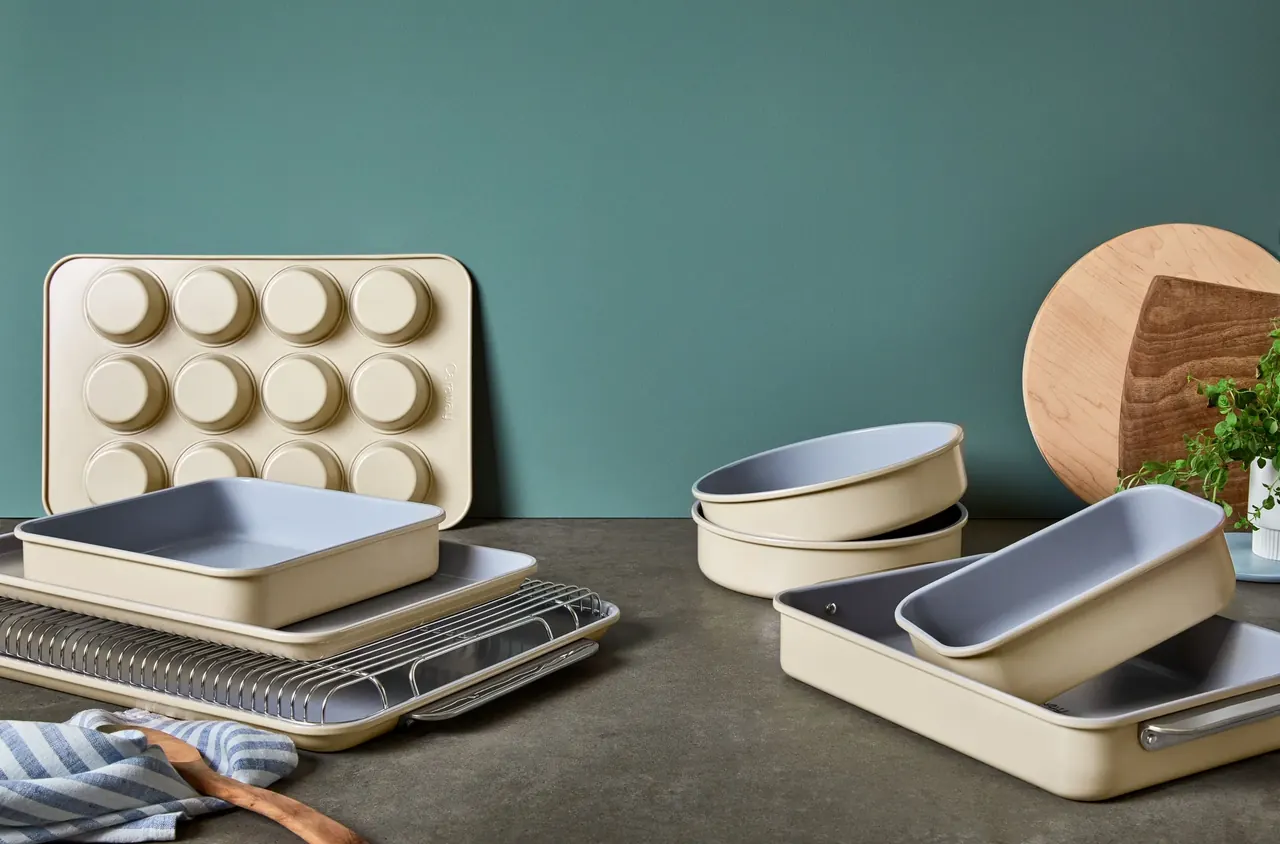
The best bakeware set to give as a Christmas gift is one built around standard, genuinely useful pans in a material that suits how the recipient actually bakes. I’d take a smaller set with a sheet pan, loaf pan, muffin pan, cake pans, or a rectangular baking dish over a big assortment of novelty pieces every time. A good gift should make cookies, cakes, casseroles, and quick breads easier to pull off all year, not just look generous in the box.
When I’m choosing bakeware as a gift, I care less about piece count and more about usefulness. The strongest sets feel cohesive: the pans cover common recipes, the sizes are familiar, and the care instructions are clear enough that the recipient will not have to guess what’s safe.
A practical mix for most home bakers usually includes some combination of a rimmed sheet pan, a 9-by-13-style rectangular dish, round cake pans, a loaf pan, and a muffin pan. Those shapes handle the bulk of holiday and everyday baking, from cookies and brownies to breakfast bakes and layer cakes.
Construction matters too. I look for pans that sit flat, feel reasonably rigid, and have reinforced or rolled edges that help resist warping. Smooth interiors and clearly stated temperature limits are more useful than decorative finishes. If you want another lens on what matters in performance, bakeware testing that compares heat distribution and food release reinforces the same practical points.
Metal is usually the safest bet if you’re buying for someone who bakes often and likes versatility. Aluminum and steel pans heat efficiently, which makes them especially helpful for cookies, muffins, sheet cakes, and layer cakes.
For gifting, I think metal sets make the most sense when the recipient wants reliable basics rather than oven-to-table presentation. They tend to be lighter than ceramic, easier to stack, and less fussy about temperature changes. That matters in a busy kitchen, especially during the holidays.
There are a few practical details worth checking. Light-colored pans usually brown more gently, while darker finishes can deepen color faster around the edges. A flimsy sheet pan can flex or warp, and that can affect how evenly food bakes. Nonstick versions can be convenient, but only if the recipient is willing to treat them carefully.
Glass and ceramic bakeware sets are especially nice Christmas gifts for people who host. They work well for casseroles, cobblers, brownies, baked pastas, gratins, and other dishes that go straight from the oven to the table.
The appeal here is not just baking performance but presentation. A set of baking dishes can feel warm and useful at the same time, particularly for someone who cooks for family gatherings. Still, this material comes with more care needs than metal.
Thermal shock is the big one. A cold dish should not go directly into a hot oven, and a hot dish should not be set onto a cold or wet surface. Bake times can also differ from metal, so standard recipes may need a little attention the first time a pan is used. For stoneware and ceramic, basic care guidance around stains and cracks lines up with the same cautious habits I’d want any gift recipient to know.
Silicone is the most situational of the three. I would not treat it as the default bakeware gift, but it can be useful for someone who likes decorative treats, small cakes, molded desserts, or holiday-specific bakes. It also helps with storage because the pieces are light and often flexible enough to tuck into tight spaces.
The tradeoff is structure. Silicone molds can be floppy when filled, especially with loose batter, so they often need the support of a sheet pan underneath. They are also not my first pick when crisp edges and deep browning matter.
As a gift, silicone makes the most sense as a compact set for a casual baker or as a complement to standard metal pans, not a full replacement. Clear temperature guidance matters here too, since not every piece is intended for the same heat range.
A smaller set is often the better gift. For a beginner, I’d rather give four or five dependable pieces than a cabinet-filling collection of pans that never get used. A starter set should cover the basics without creating clutter: one sheet pan, one loaf pan, one muffin pan, and one square or rectangular baker is often enough.
For a more experienced baker or frequent host, duplicate cake pans, extra sheet pans, or a few casserole sizes can make sense. The key is to think about what they already own. Adding a useful second sheet pan can be smarter than giving a broad set packed with duplicates they do not need.
Dimensions matter more than labels like “family size” or “extra deep.” Standard sizes are simply easier to use with existing recipes. A pan that is too deep or too small can change bake times and texture in ways that make a gift more frustrating than helpful.
This is where a lot of well-meant gifts go wrong. A set can seem perfect until the pans do not fit the oven rack, stack awkwardly in the cabinet, or scrape each other every time they’re stored.
I always think about three things: how the pieces stack, how heavy they are, and whether the handles or rims make storage harder. Nesting is helpful, but only if the pans actually sit neatly together. Glass and ceramic often need a little more protection between pieces, while taller pans may not fit under a low shelf.
It also helps to confirm the basics: oven-safe temperatures, broiler restrictions, dishwasher guidance, freezer use, and whether any lids are safe for heat. A good gift should be straightforward to live with.
The best bakeware gift is one the recipient can maintain without a lot of effort. That’s why care instructions matter so much. Nonstick surfaces usually need gentler utensils and less aggressive cleaning. Hand-washing can be kinder than repeated dishwasher cycles, even if the label allows both.
For baked-on residue, mild dish soap, warm water, and a nonabrasive sponge are the safest starting point. A baking soda paste can help on compatible surfaces, but harsh scrubbers and metal tools can shorten the life of coatings or mark softer finishes.
I also pay attention to warning signs. Darkening on metal is not necessarily a problem, but chips, deep scratches, peeling coatings, or cracks in ceramic and glass are not things I’d ignore in a piece meant for repeated use.
If you want the gift to feel a little more personal, keep the extras useful. Parchment paper, cupcake liners, a cooling rack, measuring spoons, a silicone spatula, or a pastry brush make sense because they directly support the pans.
I like the idea of using the bakeware itself as the presentation piece and adding a recipe card or a neatly folded tea towel inside. Thoughtful is better than overpacked. Holiday baking gift roundups often include the same kinds of practical extras, and I think that’s the right instinct: tools the recipient will actually reach for.
The mistake I’d avoid is padding the gift with decorative items or duplicate gadgets. If you are unsure what they already have, standard consumables like parchment or liners are usually the safest additions.
The best one includes standard pans the recipient will use often, not the one with the highest piece count. A sheet pan, loaf pan, muffin pan, cake pans, or a rectangular baking dish will usually be more useful than specialty shapes.
Yes, especially for people who make casseroles, cobblers, baked pastas, and other oven-to-table dishes. They are best for recipients who have the storage space and do not mind the extra care needed to avoid thermal shock.
Start with what they bake most. Cookie bakers need dependable sheet pans, cake bakers benefit from matching round pans, and quick-bread fans will use a good loaf pan constantly. Beyond that, look for standard dimensions, sturdy construction, and clear care instructions.
A compact set is usually best: one sheet pan, one muffin pan, one loaf pan, and one square or rectangular baker. Manageable weight, easy cleaning, and familiar sizes help beginners feel more confident.
Parchment paper, cupcake liners, a cooling rack, measuring spoons, a spatula, or a pastry brush are all useful additions. I’d skip anything overly decorative or likely to duplicate tools they already own.
The best bakeware sets to give as Christmas gifts are practical, standard-sized, and matched to the recipient’s real baking habits. If you focus on useful pieces, sensible materials, and easy care, your gift is much more likely to earn a permanent place in the kitchen.
This page contains affiliate links. If you buy through them, Stripes & Willows may earn a commission at no extra cost to you — it never affects what we recommend.

