From This Page
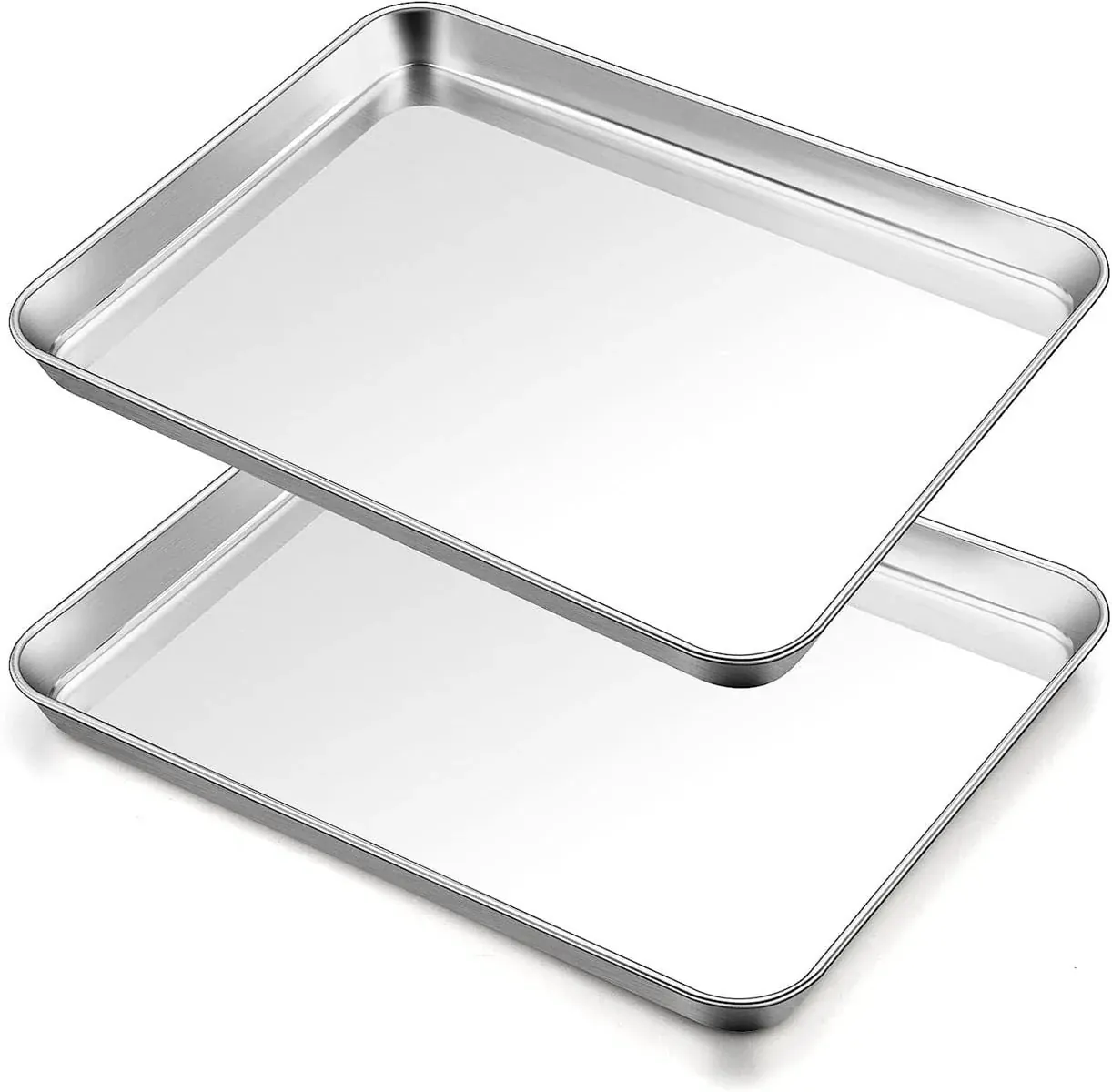
The best baking sheets to give as Christmas gifts are sturdy, versatile pans that fit the recipient’s oven and the way they actually cook. I’d usually choose a dependable rimmed sheet in a practical size, then match the material to their habits: aluminum for consistent baking, stainless steel for straightforward durability, nonstick for easy cleanup, or an insulated pan for someone focused on delicate cookies.
A baking sheet is one of those gifts that earns its place quickly. It works for cookies, roasted vegetables, sheet-pan dinners, granola, bars, and all the small holiday jobs that happen around a busy oven. The key is not buying the fanciest-looking pan. It’s choosing one that feels solid, suits the recipes they make most, and won’t become annoying to store or care for.
I like bakeware gifts best when they solve a real kitchen problem. A good sheet pan helps with everyday cooking, not just holiday baking, which makes it far more useful than a novelty piece that comes out once in December.
A rimmed pan is the most flexible option for most home cooks. The shallow edge keeps oils, juices, and loose ingredients contained, but still leaves enough access for a spatula. For many kitchens, that one shape covers everything from cookies to roasted potatoes to reheating leftovers.
Size matters just as much as shape. A half sheet is a common workhorse, but it is not automatically right for everyone. If the recipient has a compact oven, small cabinets, or cooks in smaller batches, a quarter sheet may get used more often. Before gifting a set, I’d think about storage as carefully as performance.
If I were choosing one material for a classic baker, aluminum would be high on the list. It heats efficiently and tends to bake predictably, which is especially useful for cookies, biscuits, pastries, and bars.
Light-colored aluminum usually browns more gently than dark finishes, so it can give a little more control before bottoms get too dark. That makes it a practical gift for someone who bakes in batches during the holidays and wants steady results from tray to tray.
The tradeoff is care. Bare aluminum can react with acidic ingredients, so parchment is helpful for things like roasted tomatoes or citrus-heavy marinades. It can also discolor over time. That doesn’t necessarily affect how it cooks, but it is worth knowing if the recipient prefers bakeware that keeps a polished look.
Construction matters here. I’d look for a pan with some rigidity and a reinforced rim, since a very light sheet is more likely to warp or feel flimsy when moved in and out of the oven. Guides from Food Network’s sheet-pan testing also put a lot of weight on even heating and durability, and that lines up with what matters most in a gift.
Aluminized steel sits in a useful middle ground. It can feel sturdier than thin aluminum while still offering good heat response, which makes it a sensible gift for someone who bakes often but also roasts vegetables and cooks full sheet-pan meals.
I think of this material as practical rather than precious. It often suits the person who wants one pan to handle weeknight dinners and weekend baking without much fuss. Still, I would not assume all pans in this category perform the same way. Thickness, rim construction, and finish all change how stable the pan feels in real use.
If you’re trying to choose between common materials, material comparisons like this one are helpful for understanding the basic tradeoffs between aluminum, steel, and stainless options.
Stainless steel makes sense for the cook who wants durability and a simple, non-coated surface. It resists rust and avoids some of the surface-care worries that come with nonstick finishes.
For roasting, stainless steel can be especially appealing. It handles regular use well and feels like a practical fit for someone who is more likely to make vegetables, chicken, or sheet-pan suppers than delicate sugar cookies. Food may stick more readily than it would on a nonstick surface, though, so parchment, enough fat, and good timing matter more.
This is the kind of gift I’d choose for someone who likes straightforward cookware and does not want to think too much about babying a finish. It may not be the first choice for a dedicated cookie baker, but it can be excellent for general kitchen use.
Nonstick baking sheets are a thoughtful gift when convenience matters most. They can make sticky cookies, glazed pastries, and roasted foods easier to release, and cleanup is usually simpler too.
That said, nonstick is only a good gift if the recipient is willing to care for it properly. Sharp metal utensils, abrasive scrubbers, overheating, and rough stacking can shorten the life of the coating. I’d only choose this route if gentle care won’t feel like a nuisance to them.
It also helps to include the right companion tools. A silicone spatula, parchment, or other soft utensils make more sense here than anything metal-edged. The gift works best when the accessories support the pan rather than slowly damage it.
Insulated sheets are more niche, but they can still be a good gift for the right person. They’re often useful for bakers who struggle with overbrowned cookie bottoms or who make more delicate baked goods.
I would not treat an insulated pan as the most universal option, though. Because it moderates heat, it may not be ideal for recipes that depend on strong browning, crisp edges, or good roasting performance. If I knew someone mainly bakes tender cookies, it could be a smart choice. If not, I’d usually stick to a standard everyday pan.
The same goes for perforated, decorative, or extra-deep specialty pans. They can be useful, but only when they clearly match the recipient’s routine. For most gifts, simple and sturdy wins.
Beyond material, a few practical details make a big difference. Rim shape, pan weight, and overall flatness all affect how the pan feels in daily use.
I’d look for a rimmed sheet with reinforced or rolled edges, since those are easier to grip with oven mitts and often feel more stable. A pan should also sit flat without wobbling. If the base rocks on the counter, that’s not a good sign.
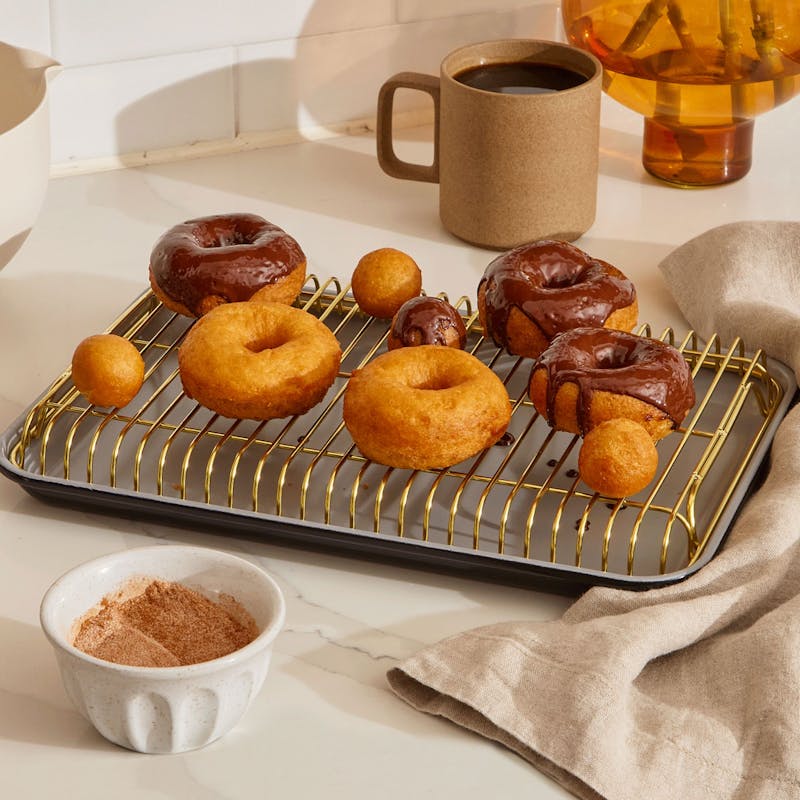
For frequent bakers, two matching sheets can be more useful than one. Swapping between cooled pans helps with even cookie spreading and more consistent browning. It also makes the gift feel intentional rather than random.
A baking sheet is easy to make more personal without turning it into clutter. The best add-ons are the ones that get used right away.
For a cookie baker, I’d lean toward parchment, a scoop, and a recipe card. For someone who cooks more savory meals, a turner, brush, or rack makes more sense. I’d skip decorative extras that don’t actually help in the kitchen.
A short care note can make a practical gift feel more thoughtful. It also helps the pan last longer.
The basics are simple: wash with mild soap before first use, dry thoroughly, and check any manufacturer guidance on oven temperature, broiler use, and dishwasher safety. I would also mention letting the pan cool before washing it. Sudden temperature changes are one of the easiest ways to encourage warping.
For most pans, soft sponges are the safest choice. Harsh scrubbers and sharp tools can scratch finishes, especially on nonstick surfaces. Even when a pan is labeled dishwasher safe, repeated dishwasher cycles can discolor some materials or wear finishes more quickly. Hand washing is often the safer habit.
Storage matters too. Nesting pans without any barrier can lead to scratches, so a towel, sheet of parchment, or pan protector is useful between them.
The most common gifting mistake is choosing novelty over function. Holiday patterns and cute shapes can be fun, but they should not replace an everyday sheet pan that actually performs well.
The second mistake is ignoring oven size and storage. A pan that does not fit the oven or has nowhere sensible to live is not much of a gift, no matter how nice it looks in the box.
The third is assuming all pans are easy-care. Materials and finishes vary, and so do their cleaning needs. A good gift choice should match not only how the recipient cooks, but also how they realistically maintain their cookware.
The best choice is usually a sturdy rimmed sheet in a size that fits the recipient’s oven. For broad everyday use, aluminum, aluminized steel, or stainless steel are all strong options, depending on whether baking performance, durability, or easy maintenance matters most.
I’d keep it simple and useful: parchment, a cooling rack, a silicone spatula, an oven mitt, or a cookie scoop. A handwritten recipe card is also a nice way to make a practical gift feel personal.
They can be, especially for someone who values easy release and cleanup. They’re best for recipients who will use gentle tools, avoid abrasive scrubbing, and follow the care instructions closely.
It depends on what they make most. Aluminum is often excellent for cookies and pastries, stainless steel is durable and straightforward, aluminized steel offers a useful balance, and nonstick works well when convenience is the priority.
A good baking sheet is one of the most useful Christmas gifts for someone who cooks at home. If you match the material, size, and care level to the recipient’s habits, it will feel thoughtful long after the holiday decorations are packed away.
This page contains affiliate links. If you buy through them, Stripes & Willows may earn a commission at no extra cost to you — it never affects what we recommend.