Guide
Best Christmas Gifts For People Who Love Baking
Our honest guide to best christmas gifts for people who love baking — what actually matters, what to skip, and how to choose well.
Our honest guide to best christmas gifts for people who love baking — what actually matters, what to skip, and how to choose well.
The best Christmas gifts for people who love baking are the ones they can actually use: sturdy basics, smart consumables, and practical little helpers that make holiday baking smoother instead of adding clutter. I’d skip novelty gadgets and focus on gifts that suit the way they bake now, from sheet-pan staples and accurate measuring tools to thoughtful homemade additions like spice blends, vanilla sugar, or a freezer-ready cookie dough.
If I’m choosing a gift for someone who bakes often, I start with tools that quietly earn their keep. The most helpful gifts tend to be the least flashy: reliable measuring equipment, sturdy baking surfaces, cooling racks, dough scrapers, and tools that help with timing and temperature.
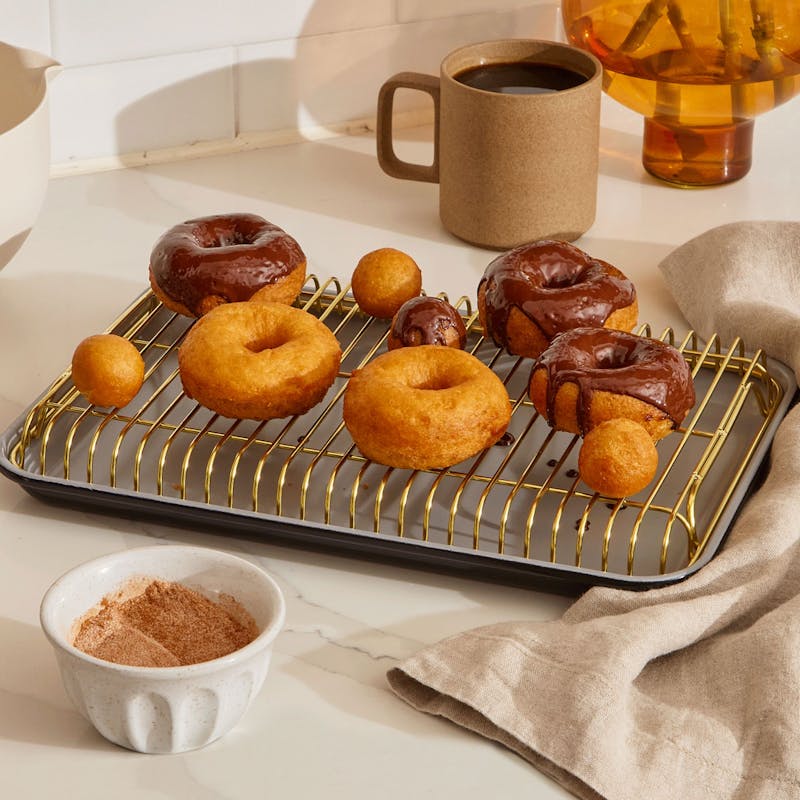
Caraway Home Small Baking Sheet Black
Shop at Caraway Home →An accurate instant-read thermometer is useful for caramels, custards, yeasted doughs, and even checking when a loaf is baked through. A good bench scraper helps portion dough, lift sticky pastry, and keep a work surface tidy. Cooling racks matter more than many people think, since proper airflow helps cookies stay crisp and prevents bars and loaves from trapping steam underneath.
The key is practicality. A baker who already has a crowded drawer usually doesn’t need another niche gadget. They need something that makes the recipes they already love easier to mix, bake, cool, or portion.
Consumables make excellent Christmas gifts because they don’t take up permanent space, and they still feel personal. I like ingredients or baking-day extras that add variety without requiring a big commitment.
Good options include specialty spices, finishing salts, cocoa, sprinkles, decorating sugar, homemade vanilla sugar, or a carefully labeled spice blend for gingerbread, snickerdoodles, or chai-style bakes. A handwritten recipe card alongside the ingredient adds a thoughtful touch and makes the gift feel complete.
This kind of gift also works well for bakers who already own plenty of equipment. Instead of guessing which tool they might want, you’re giving them something they can fold into their next batch right away.
If you want the gift itself to come from your kitchen, choose bakes that hold up well at room temperature and during transport. Sturdy cookies, bars, quick breads, fudge, brittle, bark, roasted nuts, and snack mix are far easier to gift than anything fragile, frosted, or perishable.
I’d lean toward shortbread, biscotti, gingerbread, brownies, blondies, jam bars, pumpkin bread, cranberry-orange loaf, and simple fudge. These options portion cleanly, store well, and usually still taste good a day or two later if they’re packed properly.
Not every festive bake is a good gift bake. Cream-filled pastries, soft frostings, and custard-based desserts are best kept for same-day serving rather than wrapping up for a porch drop-off or mailing. The Kitchn’s advice on homemade food gifts that travel well is a useful reminder that the trip matters almost as much as the recipe.
A good baking gift box doesn’t need a huge number of items. It just needs contrast. I think in terms of texture, flavor, and shape, so the box feels varied instead of repetitive.
This mix keeps the box from becoming too sweet and gives people a few different things to reach for. It also helps to separate strongly scented items. Peppermint, anise, or heavily spiced treats can transfer flavor if everything is packed together. Individual wrapping or simple parchment dividers go a long way.
I’d also portion with the recipient in mind. A small household might appreciate three or four carefully chosen items in modest amounts, while a larger family can use bigger portions of the most shareable treats rather than tiny samples of everything.
Packaging is part of the gift, but it’s also part of keeping the food fresh. The prettiest box in the world won’t help if it traps steam or lets cookies slide around and break.
For crisp cookies and bars, rigid tins or sturdy food-safe boxes are the safest choice. Parchment between layers protects surfaces and helps prevent sticking. Soft and crisp treats should be packed separately, since moisture from softer items can turn crisp cookies stale surprisingly fast.
Quick breads and loaves need to be cooled completely, then wrapped tightly before they go into a gift bag or box. I never seal anything warm, because condensation ruins texture and shortens shelf life. This general approach lines up with straightforward baked-goods packaging guidance focused on freshness and presentation.
Labels are worth the extra minute. Include the bake date, a best-by note, storage instructions, and major allergens when they apply. If nuts, dairy, eggs, wheat, soy, or sesame are involved, say so clearly. If your kitchen isn’t allergen-free, it’s kind to mention that too.
For people who love baking, one of the kindest gifts can be saving them time. That can mean a finished assortment of treats, but it can also mean giving them something halfway done in a useful, organized way.
Freezer-friendly cookie dough is especially practical. Scoopable dough can be portioned ahead so the recipient can bake only what they want. Slice-and-bake dough works well too, as long as it’s wrapped tightly and labeled with baking guidance. Food Network’s make-ahead holiday baking guide mirrors this freezer-first approach, which is helpful during the busiest week of December.
Fully baked cookies, brownies, bars, and unfrosted quick breads can also be made in advance and frozen airtight. The useful detail is how they’re thawed: still wrapped, so condensation forms on the outside of the wrapping instead of on the bake itself.
If I’m organizing several gifts, I break the process into stages: shop first, prep dough next, bake durable items early, then finish fresher loaves and final packaging closer to delivery day. That rhythm keeps the quality better than trying to do everything in one long afternoon.
Most homemade baking gifts go wrong in familiar ways: the treats were packed warm, mixed with the wrong textures, under-protected in transit, or sent without enough information.
I’d avoid these common mistakes:
It also helps to be realistic about dietary needs. If you’re making substitutions for gluten-free, egg-free, or dairy-free baking, structure and shelf life can change. I wouldn’t hand out an untested variation as a holiday gift if consistency matters.
For mailed cookie gifts in particular, sturdier shapes and firmer textures tend to do best. Allrecipes has a helpful round-up of Christmas cookies that hold together in the mail, and the overall point is simple: pretty is nice, but durable is better.
The safest choices are practical tools they’ll use often, quality baking ingredients, and well-packed homemade treats. I’d focus on useful items like measuring tools, cooling racks, dough scrapers, spice blends, recipe cards, or a small assortment of sturdy baked goods.
Cookie dough, baked cookies, brownies, bars, and unfrosted quick breads are all good make-ahead options. Many freeze well if wrapped airtight and thawed while still wrapped.
Low-moisture items usually last best: biscotti, shortbread, crisp cookies, brittle, roasted nuts, and snack mix. They still need airtight packaging and a clear best-by note, since not every item keeps equally well.
Dense bars, sturdy cookies, simple loaves, fudge, bark, and brittle are usually the most reliable. Delicate decorations, soft frostings, and refrigerated desserts are much harder to transport well.
The best Christmas gifts for people who love baking are useful, thoughtful, and easy to fold into real kitchen life. I’d choose practical tools, good ingredients, or sturdy homemade treats with careful packaging, because those gifts feel generous without creating extra clutter.

Paige Gilmore
Founder of Stripes & Willows — recipe creator, food photographer and stylist. Every guide is written to make honest, useful kitchen decisions easier.
More about Stripes & Willows →This page contains affiliate links. If you buy through them, Stripes & Willows may earn a commission at no extra cost to you — it never affects what we recommend.