Guide
Best Christmas Gifts For New Homeowners Who Cook
Our honest guide to best christmas gifts for new homeowners who cook — what actually matters, what to skip, and how to choose well.
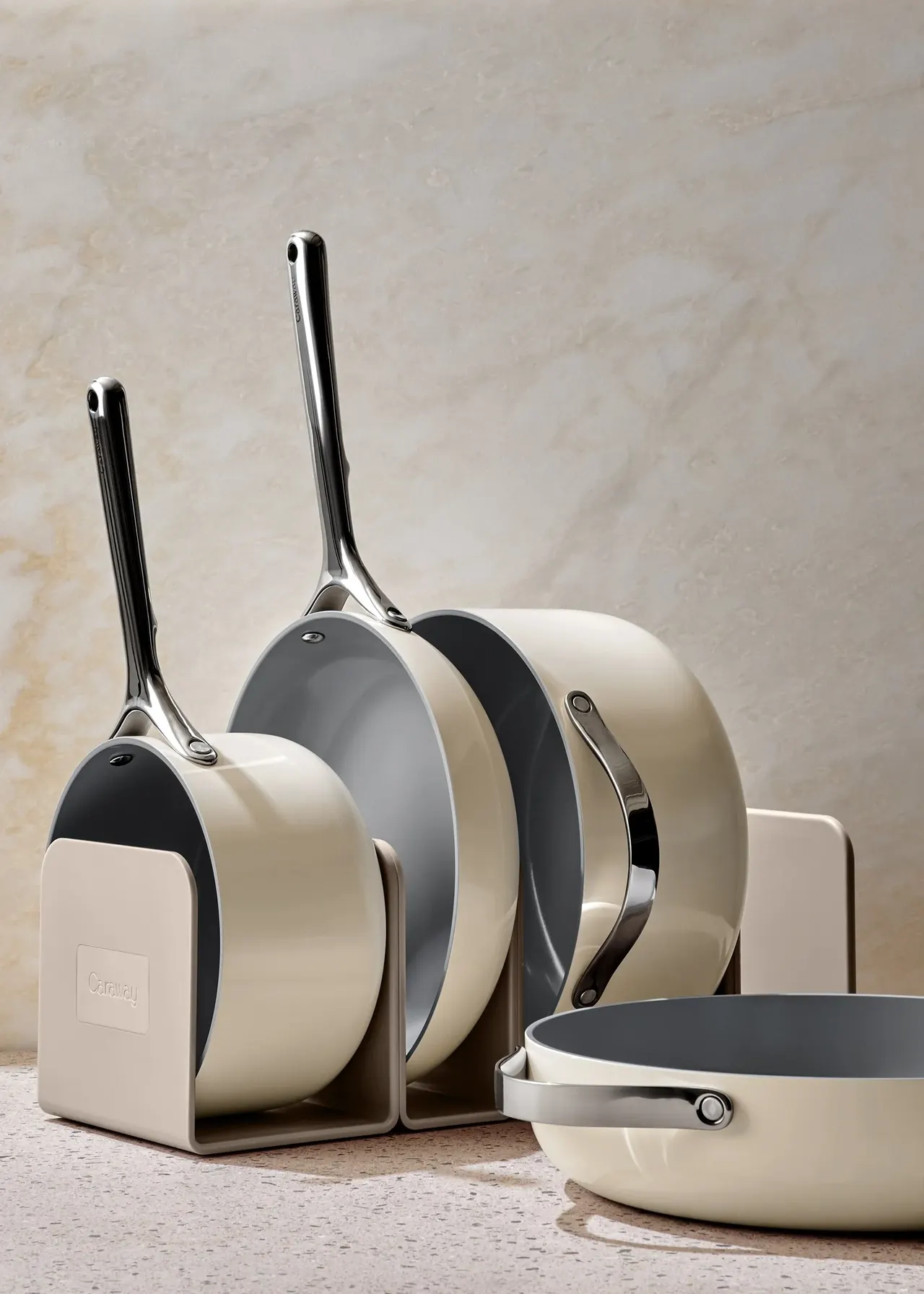
Our honest guide to best christmas gifts for new homeowners who cook — what actually matters, what to skip, and how to choose well.
 Best Overall
The best Christmas gifts for new homeowners who cook are the pieces they will reach for on an ordinary Tuesday: a solid cutting board, a comfortable chef’s knife, a versatile pan, a useful baking dish, or a few prep essentials that make dinner feel simpler. I would skip novelty gadgets and choose something that fits how they actually cook, how much space they have, and how much care they are realistically willing to give it.
A good gift begins with routine, not looks. Before I choose anything for a new kitchen, I think about what the recipient cooks most often, how confident they are in the kitchen, and how much storage they have after a move.
Crock-Pot 7-Quart Stainless Steel Cook & Carry Digital Countdown Slow Cooker
Shop at Amazon →For beginners, the safest gifts are forgiving essentials: measuring spoons, mixing bowls, kitchen shears, a stable cutting board, a sheet pan, or a versatile skillet. These are the tools that make everyday cooking less annoying without asking for special technique.
For more experienced cooks, I would look for a gap instead of buying a full set. Someone who makes soups, pasta sauces, and braises may appreciate a heavy lidded pot. A frequent baker may get more use from a digital scale and reliable bakeware. Someone who meal preps will likely appreciate containers that stack neatly and hold up to repeat use. Serious Eats notes the value of practical meal-prep tools, and that same logic works well for holiday gifting.
Space matters too. In a compact kitchen, nesting bowls, stackable containers, vertical cutting boards, and fold-flat prep tools are often more useful than anything bulky. A gift should earn its storage.
If I want a gift to become part of daily life, prep tools are usually the first place I look. They support nearly every meal, and they tend to be useful across skill levels.
A chef’s knife is often a better gift than a large knife block, especially if kitchen space is limited. A paring knife is helpful for smaller tasks, and a serrated knife is useful for bread and delicate produce. What matters most is not quantity but comfort, control, and easy maintenance.
The cutting board matters just as much. I look for one that is large enough for real prep, steady on the counter, and easy to clean. Decorative boards can be lovely, but if they are too small or too fussy to maintain, they end up leaning against a backsplash instead of being used.
Other strong choices in this category include:
I especially like gifts in pairs or small groupings here. A cutting board with a bench scraper, or a scale with measuring spoons, feels thoughtful without becoming clutter.
Cookware can be a wonderful gift, but only when the material suits the cook. I would never treat one type of pan as universally right, because daily habits, stove type, and cleanup preferences matter more than hype.

Xtrema Pure Ceramic Cookware Home Cook Set
Shop at Xtrema Cookware →Stainless steel is a practical choice for cooks who like browning, sautéing, pan sauces, and higher-heat cooking. It is durable and widely useful, but it does have a learning curve. Food can stick if the pan is not preheated properly or if there is too little fat. For someone who enjoys technique and wants one pan to do many jobs, it makes sense.
Nonstick is useful for eggs, pancakes, and delicate fish, and it tends to appeal to cooks who care most about easy release and straightforward cleanup. The tradeoff is that it needs gentler care. I would make sure the recipient is comfortable avoiding abrasive cleaning and treating the surface a little more carefully.
Cast iron holds heat beautifully and works well for searing, baking, frying, and oven cooking. Enameled cast iron offers some of the same strengths without the exposed seasoning surface, which makes it a little less demanding in daily use. The downside is weight. A heavy pot sounds generous, but it is only helpful if the recipient can lift it safely when full.
Carbon steel can become naturally slick with use and responds quickly to heat, but it needs drying and basic upkeep similar to cast iron. Clad cookware balances responsiveness and even heating, which is useful for cooks who want versatility across many recipes.
Before gifting any cookware, I would always check two things: compatibility with the cooktop and oven-safe limits for handles and lids. Induction stoves require magnetic cookware, and stovetop-to-oven convenience depends on more than just the pan material. A piece can look versatile and still be a poor fit in practice. That is why cookware gift guides for new homes tend to focus on flexible, everyday pieces rather than huge sets.
New homeowners often host in small, informal ways first: a simple dinner, brunch with family, cookies at Christmas, leftovers the next day. That is why I like bakeware and oven-to-table serving pieces as gifts. They can feel a little special while still being useful all year.
Ceramic and stoneware hold heat well and move nicely from oven to table, but they can be vulnerable to sudden temperature changes. Glass makes browning easy to monitor and stores neatly, though it also needs care around thermal shock. Metal bakeware is practical, responsive, and especially good for cookies, roasting, and weeknight baking.
The best piece is usually not the biggest one. A medium baking dish, a lidded casserole, or one versatile serving bowl is often more useful than an oversized platter that barely fits in a cabinet. I think about batch size, refrigerator storage, dishwasher use, and cabinet depth before I think about presentation.
I also prefer classic shapes over heavily seasonal ones. A holiday motif can be charming, but a simple dish that works in December and again in March is usually the better gift.
Care instructions are part of the gift. A tool is only truly helpful if the recipient can maintain it without feeling like they have taken on homework.
Stainless steel, glass, and many glazed ceramics are fairly straightforward, though manufacturer guidance still matters. Nonstick surfaces generally do best with gentle cleaning and care around utensils. Wooden boards and wooden-handled tools should be hand washed, dried promptly, and occasionally conditioned if the wood starts to look dry.
Cast iron and carbon steel need more attention. They should be dried thoroughly after washing, and they benefit from a light layer of oil to help maintain seasoning. I would not give bare cast iron to someone who has made it clear they want low-maintenance cleanup.
If a gift has moving parts, sharp seams, delicate finishes, or multiple pieces to wash, I think hard about whether it is solving a real problem. In my kitchen, the tools that stay are the ones that are easy to use and easy to put away.
The easiest way to miss with a kitchen gift is to buy for an imagined version of the recipient instead of the real one.
I would be careful about duplicates. New homeowners often receive multiple cutting boards, mugs, towels, and measuring sets. If possible, check a registry, ask a partner, or choose something a little less likely to overlap.
I would also avoid single-use gadgets unless they solve a problem the recipient has often. If a task can already be handled by a knife, grater, sheet pan, or mixing bowl, another device may only add clutter.
Large countertop appliances are another risk. They depend on outlet placement, counter space, cabinet clearance, and personal habits. In smaller kitchens especially, space-saving kitchen upgrades are often the more considerate choice.
Finally, I would be realistic about fragility and upkeep. Thin glass, delicate ceramics, unfinished wood, and high-maintenance materials can be lovely, but they are not always practical for a busy household. A thoughtful gift should make cooking easier, not make the recipient nervous.
A good gift is a versatile kitchen essential that supports frequent meals, like a cutting board, chef’s knife, skillet, baking dish, or prep set. I would choose based on their cooking habits, storage space, and comfort with the required care.
The best options are tools that improve everyday work: a stable cutting board, a comfortable knife, a digital scale, a useful pan, or an oven-to-table casserole. Practical upgrades tend to be more appreciated than novelty items.
Measuring tools, mixing bowls, kitchen shears, a grater, sheet pans, containers, and heat-safe utensils are all strong choices. These are easy to use, easy to store, and helpful even when the kitchen is still coming together.
A gift feels more personal when it matches how they cook together. A serving board, baking dish, or a pair of practical prep tools can feel distinctive without losing everyday usefulness. Practical housewarming gift roundups often land on the same idea: the most memorable gifts are the ones people actually use.
The best Christmas gifts for new homeowners who cook are not flashy. They are steady, useful, well-chosen tools that fit the kitchen they have now and the meals they make every week.
If I am deciding between something clever and something practical, I will choose practical every time. That is usually the gift that stays out of the moving box and into regular use.

Paige Gilmore
Founder of Stripes & Willows — recipe creator, food photographer and stylist. Every guide is written to make honest, useful kitchen decisions easier.
More about Stripes & Willows →This page contains affiliate links. If you buy through them, Stripes & Willows may earn a commission at no extra cost to you — it never affects what we recommend.