Guide
Best Cookware Sets To Give As Christmas Gifts
Our honest guide to best cookware sets to give as christmas gifts — what actually matters, what to skip, and how to choose well.
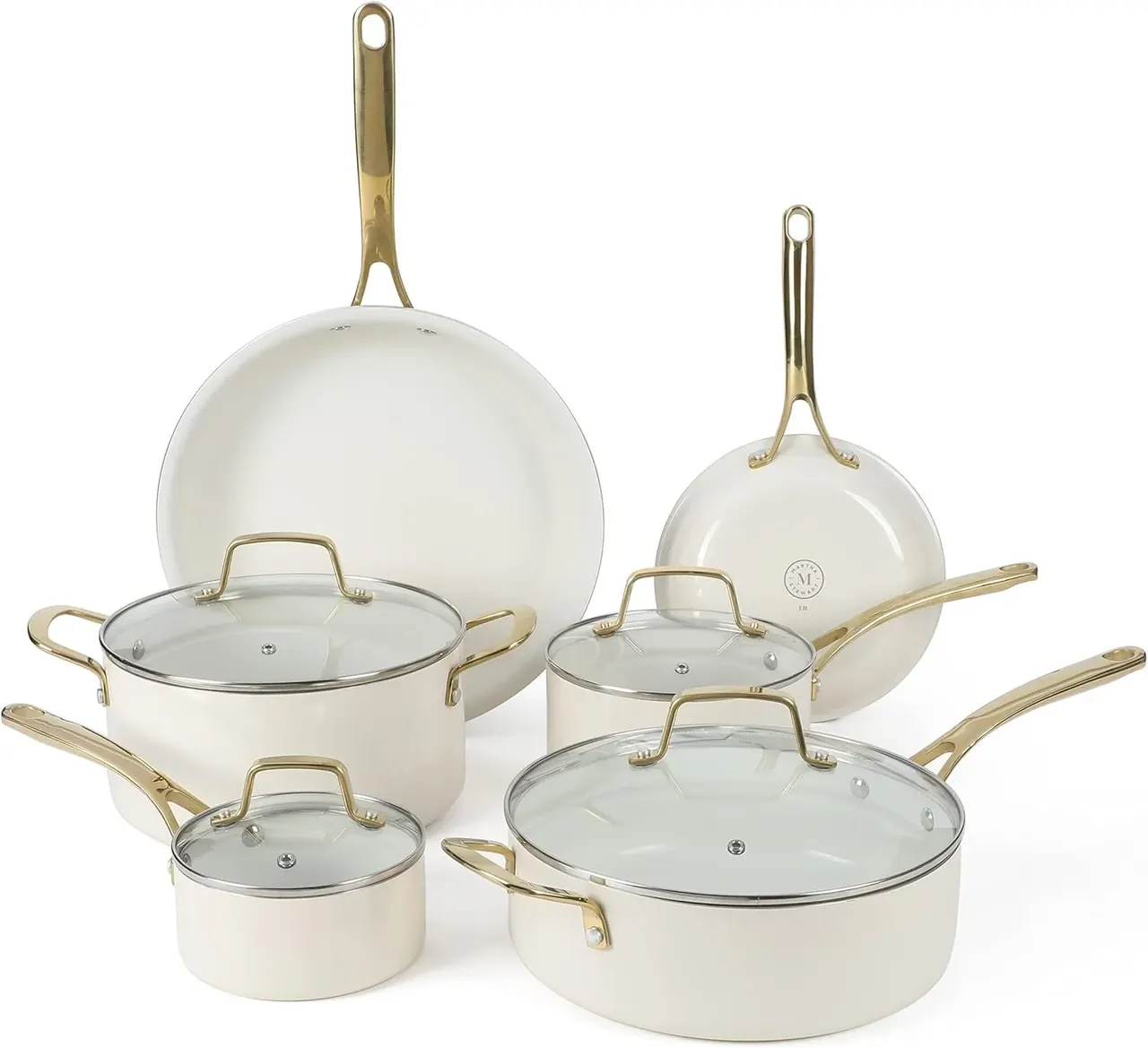
Our honest guide to best cookware sets to give as christmas gifts — what actually matters, what to skip, and how to choose well.
 Best Overall
 Best Value
 Also Great
The best cookware sets to give as Christmas gifts are the ones that fit the cook’s real life: their stove, the meals they make on a normal weeknight, their storage space, and how much upkeep they’re willing to do. A generous set is only useful if the pieces earn their place in the kitchen, so I’d focus less on piece count and more on material, pan sizes, oven limits, and care.
I start with the person, not the packaging. Someone cooking for one or two people may get far more use from a compact set with a small saucepan, a medium skillet, and a practical pot than from a bulky collection padded with extra lids and tiny pans. A larger household usually needs a wider skillet, a 3- to 4-quart sauté pan, and a bigger pot for soup, pasta, or batch cooking.
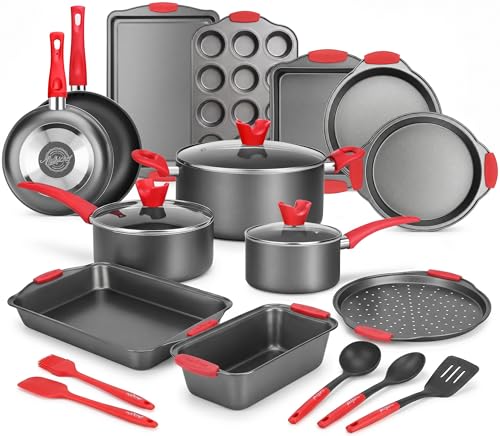
NutriChef 21-Piece Nonstick Cookware Set - PTFE/PFOA/PFOS Free Heat Resistant Lacquer Kitchen Ware Pots Pan w/ Cool-Touc
Shop at Amazon →It also helps to think about how they cook. If they make eggs, fish, pancakes, or quick breakfasts, easy-release cookware makes sense. If they like browning meat, building pan sauces, or moving pans from stovetop to oven, stainless steel is often the better fit. For someone who wants straightforward cleanup, I would not hand them cookware that asks for seasoning, hand drying, or careful stacking unless I knew they actually wanted that kind of project.
One common mistake is assuming a higher piece count means a better gift. In practice, manufacturers often count lids, inserts, or duplicate small pieces. I look at the actual pan functions first.
Stainless steel is usually the safest all-around gift when the recipient enjoys cooking and wants cookware that can handle a lot. It works well for searing, sautéing, boiling, simmering, and finishing in the oven, as long as the manufacturer’s temperature limits allow it. The big advantage is durability and range.

Nouvelle Stainless 10-Piece Cookware Set
Shop at Anolon →The tradeoff is that stainless steel is not naturally nonstick. Delicate foods can stick if the pan is not properly preheated or if there is not enough fat in the pan. That makes it a better match for someone comfortable with a little technique rather than someone who wants the easiest possible cleanup every day.
Construction matters here. Fully clad pans, which carry a conductive core up the sides, often heat more evenly than very thin pans or base-only designs. The difference in stainless steel construction and heat behavior is worth understanding before you choose a set. I also pay attention to handle balance and lid fit, because stainless sets are often meant to be used for years.
If the person you’re buying for wants simple cleanup and cooks delicate foods often, a nonstick or ceramic-coated set can be a thoughtful gift. These surfaces are useful for eggs, crepes, fish, and lower-fat cooking, and they can make weeknight meals feel much easier.
GreenLife 10 Piece Nonstick Pots & Pans Set, Detachable Handle & Stackable Cookware Set, Non Toxic PFAS-Free Skillets, I
Shop at Amazon →The drawback is longevity. Coated cookware is a wear surface, not a forever finish. Overheating, abrasive scrubbers, metal utensils, and rough stacking can shorten its useful life. For that reason, I think these sets are best for cooks who will follow the care instructions and appreciate the convenience enough to accept the extra caution.
This is also where gift pairing can help. Pan protectors, silicone or wooden utensils, and a good pair of oven mitts make more sense than random kitchen gadgets. The Consumer Reports cookware buying guide is a useful reminder that materials differ a lot in performance and care, even when sets look similar on the shelf.
Cast iron suits a certain kind of cook beautifully. It holds heat well, browns food deeply, and shines in cornbread, roasting, skillet dinners, and recipes that go from stovetop to oven. If the recipient likes hearty cooking and doesn’t mind a heavier pan, cast iron can be a lasting gift.
But it is not the easiest universal choice. Traditional cast iron is heavy, slower to heat, and usually needs drying and seasoning care to prevent rust. That can be rewarding for someone who enjoys maintaining cookware, but it can also turn into cupboard clutter for someone who prefers low-effort tools.
I’d also think carefully about lifting strength and storage. A heavy pan with a short helper handle can still feel awkward in a small kitchen. If the recipient cooks on a glass surface, cast iron generally works, but the rough underside needs careful handling to avoid scratches.
Enameled cast iron or enamel-coated pieces are especially nice for cooks who love stews, braises, tomato sauces, and dishes with wine or other acidic ingredients. The enamel coating removes the need for seasoning and is generally friendlier for acidic cooking than bare cast iron.
The practical tradeoff is still weight. These pieces are often heavy, and the enamel needs thoughtful handling. Sudden temperature shifts, harsh knocks, and utensils that chip the surface can shorten the life of the cookware. For the right cook, though, enamel can strike a good balance between heat retention and easier upkeep.
When I consider enameled cookware as a gift, I think less about getting a huge set and more about whether the recipient will actually use the larger covered pieces. In many kitchens, one or two substantial pieces are more useful than a crowded collection.
A good gift set usually includes the basics in useful sizes. I like to see an 8- to 10-inch skillet, a 10- to 12-inch skillet for larger meals, a 1.5- to 3-quart saucepan, a 3- to 4-quart sauté pan, and a larger pot in the 6- to 8-quart range. Matching lids should cover the pieces that genuinely benefit from covered cooking.
I’m wary of sets built around filler. A tiny skillet, duplicate saucepan sizes, or bulky accessories can make a box look generous without adding much day-to-day value. A coordinated set for a first apartment or registry can make sense, but for an established cook, a smaller, smarter set is often more thoughtful.
This is the step people skip, and it matters. Induction cooktops need a magnetic base, and not every stainless steel pan is induction compatible. If the listing is vague, the U.S. Department of Energy’s overview of induction cooking explains why magnetic compatibility matters. A pan can look right and still be wrong for the stove.
I also check oven-safe limits carefully. “Oven safe” does not mean every piece can handle any temperature. Lids, knobs, nonstick coatings, and removable or silicone-wrapped handles can have lower limits than the pan body itself. Broiler use may be excluded altogether.
If the recipient moves cookware from stovetop to oven regularly, those details are not small. They shape what the cookware can actually do.
Even without getting caught up in marketing language, there are a few signs I pay attention to. A good pan should sit flat, feel balanced, and have a handle shape that looks comfortable when the pan is full, not just empty. Riveted handles tend to feel secure, though they can be slightly more annoying to clean around. Helper handles matter on wide or heavy pans.
Lid fit is another clue. A lid that wobbles too much can release steam too fast and become irritating in everyday use. Thin cookware can heat quickly but may be more prone to hot spots or warping. Very thick cookware can be steady but unnecessarily heavy for some cooks. I’m usually looking for practical balance rather than the most extreme build in either direction.
The Good Housekeeping cookware guidance is helpful on this point too: the best set is not the one with the most pieces, but the one with the right pieces and sensible construction.
The cookware someone will actually use is the cookware that suits their habits. Stainless steel often tolerates more vigorous cleaning, though burnt-on food may still need soaking. Nonstick and ceramic-coated cookware usually benefit from softer utensils, lower heat, and gentler washing. Traditional cast iron needs prompt drying and ongoing care. Enameled surfaces avoid seasoning but still need nonabrasive cleaning and a bit of patience.
I also think about storage. Stacking coated or enameled pans without protection is a fast way to end up with scratches and chips. If the cookware is meant to nest, pan protectors are a practical addition. Care instructions are not glamorous, but they often decide if a gift feels helpful or high maintenance.
I’d check material, actual pan sizes, stove compatibility, oven limits, handle comfort, lid fit, and care instructions. It also helps to think about storage space and avoid duplicating pieces the recipient already relies on.
Stainless steel is generally better for versatility, durability, searing, and oven use. Ceramic-coated cookware is easier for delicate foods and cleanup. The better gift depends on whether the cook values technique and range or ease and convenience.
For a family, a medium-to-large set with a 10- to 12-inch skillet, a sauté pan, and a larger pot is often useful. For a new homeowner, I prefer a compact set with versatile essentials over a crowded collection that takes up cabinet space.
A cookware set can work well, but an experienced cook may appreciate a carefully chosen set with strong everyday pieces rather than lots of extras. If they already own a solid collection, one missing category can be more thoughtful than a full replacement.
The best cookware sets to give as Christmas gifts are practical, not just impressive in the box. If you match the material, sizes, and care needs to the person’s cooking life, the gift will feel useful from the first meal onward.

Paige Gilmore
Founder of Stripes & Willows — recipe creator, food photographer and stylist. Every guide is written to make honest, useful kitchen decisions easier.
More about Stripes & Willows →This page contains affiliate links. If you buy through them, Stripes & Willows may earn a commission at no extra cost to you — it never affects what we recommend.