Guide
Best Electric Kettles To Give As Christmas Gifts
Our honest guide to best electric kettles to give as christmas gifts — what actually matters, what to skip, and how to choose well.
Our honest guide to best electric kettles to give as christmas gifts — what actually matters, what to skip, and how to choose well.
 Best Overall
 Best Value
The best electric kettles to give as Christmas gifts are the ones that fit the person’s daily habits, not the prettiest box on the shelf. I’d look first at how they drink tea or coffee, how much water they usually heat, how much counter space they have, and which kettle material makes the most sense for their kitchen. A good gift kettle should also be easy to clean, simple to pour, and equipped with automatic shutoff and boil-dry protection.
Electric kettles work as gifts because they solve a small, everyday problem in a way that feels useful right away. They heat water for tea, French press coffee, instant oatmeal, noodles, stock, and a quick start on pasta water, without taking over the stove. That kind of steady usefulness is what makes them a smart Christmas present for students, first-apartment cooks, office tea drinkers, and anyone who likes a reliable kitchen routine.
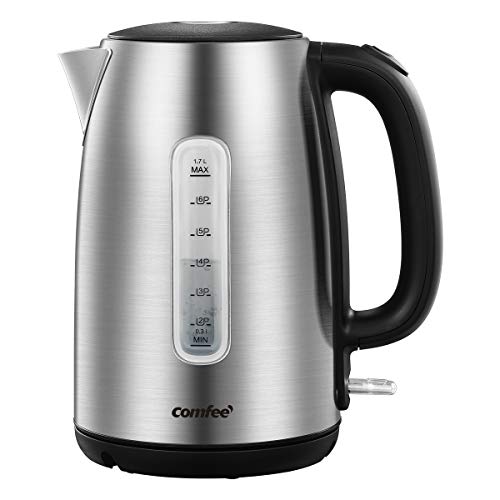
Stainless steel is often the easiest material to gift because it tends to suit a wide range of kitchens and routines. It’s durable, practical, and usually less fussy about bumps and daily handling than glass. If I were choosing for someone who wants one kettle to use constantly without much ceremony, stainless steel would be high on the list.
COMFEE' Stainless Steel Electric Kettle, 1.7 Liter Tea Kettle Electric & Hot Water Kettle, 1500W Fast Boil with LED Ligh
Shop at Amazon →The tradeoff is that steel bodies can get hot on the outside, and the opaque interior makes it harder to see mineral buildup or the exact water level. That means I’d pay attention to design details: a comfortable handle, a secure lid, a wide opening, and interior construction that’s smooth and easy to inspect. A kettle can look sturdy but still be annoying to clean if the opening is too tight or the seams trap scale.
For gift-giving, stainless steel also works well in kitchens that already have mixed appliance finishes. It tends to look at home without demanding attention. If the recipient mainly wants hot water for several different jobs, rather than a highly specific tea or coffee setup, this material is often the most forgiving choice.
Glass kettles appeal to people who like to see what’s happening. You can check the water level quickly, spot mineral residue sooner, and generally keep an eye on cleanliness without opening the lid. For someone who values that visibility, glass can feel more intuitive day to day.
Amazon Basics Electric Kettle with Glass Carafe for Tea and Coffee, Fast Boiling, Auto Shut-Off, Boil-Dry Protection, Te
Shop at Amazon →There are a few practical cautions. Glass shows fingerprints, water spots, and condensation more readily than steel, so it asks for a bit more wiping if the recipient likes a tidy counter. It also needs gentler handling. I would avoid a glass kettle for someone with a cramped sink area, a very busy shared kitchen, or a tendency to knock appliances around.
Cleaning matters here too. A broad opening and removable filter make a glass kettle much easier to maintain, especially in hard-water areas where scale builds up fast. If appearance matters as much as function, glass has a clean, light look, but it makes sense only if the person receiving it won’t mind the extra upkeep.
Some electric kettles use plastic in the body, interior, or water-contact parts. That can make them lighter and easier to lift, which is genuinely useful for older adults or anyone who prefers a kettle that doesn’t feel heavy when filled. A cooler-touch exterior can be another practical advantage.
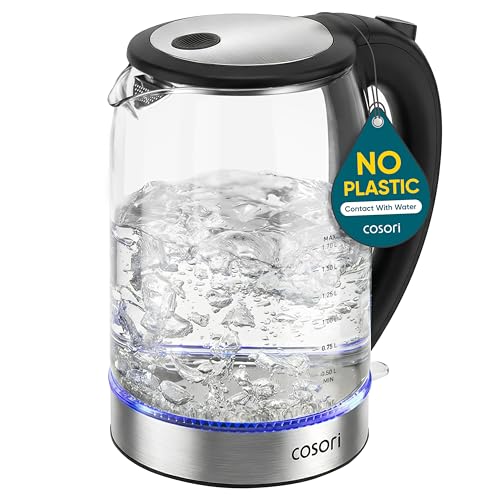
Cosori Electric Kettle, No Plastic Contact with Water, 1.7L, Black
Shop at Amazon →My main concern with this category is the amount of plastic in the water path and how clearly the materials are described. Some people are more sensitive to lingering smells or taste changes, and that matters even more when the kettle is meant as a gift. I’d lean toward designs that minimize water contact with plastic and clearly identify food-contact materials.
If a kettle has any plastic odor at first, the care instructions should be followed closely. A faint new-appliance smell may fade after a few rinses and boils, but a strong smell that persists is worth taking seriously. For a gift, this is one area where simple and clearly made usually feels better than feature-packed and questionable.
Capacity is the first practical question. A compact kettle makes more sense for one or two mugs at a time, a dorm room, or a small office. A larger kettle is better for frequent tea rounds, cooking tasks, or households where several people use it throughout the day. I’d also check the minimum fill line, since an oversized kettle can be awkward if the recipient mostly heats water for one cup.
Speed matters, but not as much as people think. Higher wattage usually means faster heating, though actual boil times still depend on fill level, starting water temperature, altitude, and kettle design. I’d rather give a kettle that pours cleanly and shuts off reliably than one that promises speed but feels clumsy in use. That matches what careful equipment testing often looks at: boil speed, accuracy, and ease of use, not just marketing claims.
Counter space is another detail people skip. A kettle should fit under cabinets, leave room for the lid to open, and sit somewhere dry and convenient. A rotating base helps right- and left-handed users, and cord storage underneath can make the setup much neater.
The best kettle features are the ones the recipient will use without thinking. Automatic shutoff and boil-dry protection are the two I’d treat as non-negotiable. Basic safety guidance consistently points to those features as worthwhile safeguards, alongside stable placement and dry operation areas, as noted in this overview of electric kettle safety.
Variable temperature control is especially helpful for tea drinkers and pour-over coffee fans. Delicate teas can suffer with fully boiling water, and more precise heating gives coffee brewing better consistency. If I were choosing a kettle for someone who cares about brewing details, I’d focus on readable controls and sensible temperature steps rather than a long list of presets. Good specialty reviews tend to emphasize temperature precision and pour control for exactly that reason.
Spout shape matters more than it seems. A broad spout is good for filling pots quickly, while a narrow or gooseneck spout gives better control for manual coffee brewing. Neither is better in every kitchen. It depends on whether the person uses the kettle as a general hot-water tool or as part of a more specific brewing ritual.
Keep-warm settings can be useful in homes where people make several drinks in a row. I still think fresh water matters, so I wouldn’t treat keep-warm mode as a reason to let water sit indefinitely.
The biggest mistake is buying on looks alone. A beautiful kettle that is too heavy, too tall for the counter spot, awkward to clean, or wrong for the person’s drink habits becomes clutter fast.
Another common miss is choosing a specialty spout for someone who mainly wants to fill a saucepan or make instant noodles. Precision pouring is helpful, but only when it matches how the kettle will actually be used.
I’d also be careful about ignoring cleaning needs. Hard-water buildup is real, and a kettle with a narrow opening or difficult seams can become frustrating. A material comparison like this one on glass, stainless steel, and plastic kettle construction is useful because it highlights not just style, but weight, visibility, and upkeep.
A kettle gift is even better when the recipient knows how to keep it in good shape. I’d mention a few basics: don’t immerse the base, don’t run the kettle empty, and empty standing water regularly instead of letting it sit for days. Those habits help both safety and flavor.
Descaling should happen before buildup gets thick. In hard-water areas, mineral deposits can collect around the filter, heating area, and water line pretty quickly. It’s best to follow the manufacturer’s instructions rather than assume every finish or interior will respond well to the same homemade method.
Exterior care is simple but worth doing. Wiping the body with a soft damp cloth helps prevent marks on glass and polished steel. Abrasive scrubbers and harsh cleaners are rarely a good idea on any electric kettle finish.
The best ones match the recipient’s habits: the right capacity, a material that suits their preferences, and features they’ll actually use. I’d prioritize automatic shutoff, boil-dry protection, easy cleaning, a comfortable handle, and a clear way to monitor water level.
For tea and coffee, temperature control is usually the most useful upgrade. Tea drinkers benefit from gentler heat for delicate leaves, while coffee drinkers may want more controlled pouring and steadier temperature selection.
Look for appropriate capacity, practical pouring, a stable base, safety shutoff features, and an opening that makes cleaning manageable. If the recipient is particular about brewing, then temperature control and spout design become more important.
Neither is universally better. Glass offers visibility and easy water-level checking, while stainless steel usually feels tougher and more forgiving in daily use. The better choice depends on how careful the recipient is with cleaning, handling, and kitchen space.
An electric kettle is one of those Christmas gifts that earns its place quickly when it fits the person using it. Choose for habits first, materials second, and extra features last, and the gift is much more likely to become part of their everyday kitchen rhythm.

Paige Gilmore
Founder of Stripes & Willows — recipe creator, food photographer and stylist. Every guide is written to make honest, useful kitchen decisions easier.
More about Stripes & Willows →This page contains affiliate links. If you buy through them, Stripes & Willows may earn a commission at no extra cost to you — it never affects what we recommend.