Guide
Best Kitchen Tools To Give As Christmas Gifts
Our honest guide to best kitchen tools to give as christmas gifts — what actually matters, what to skip, and how to choose well.
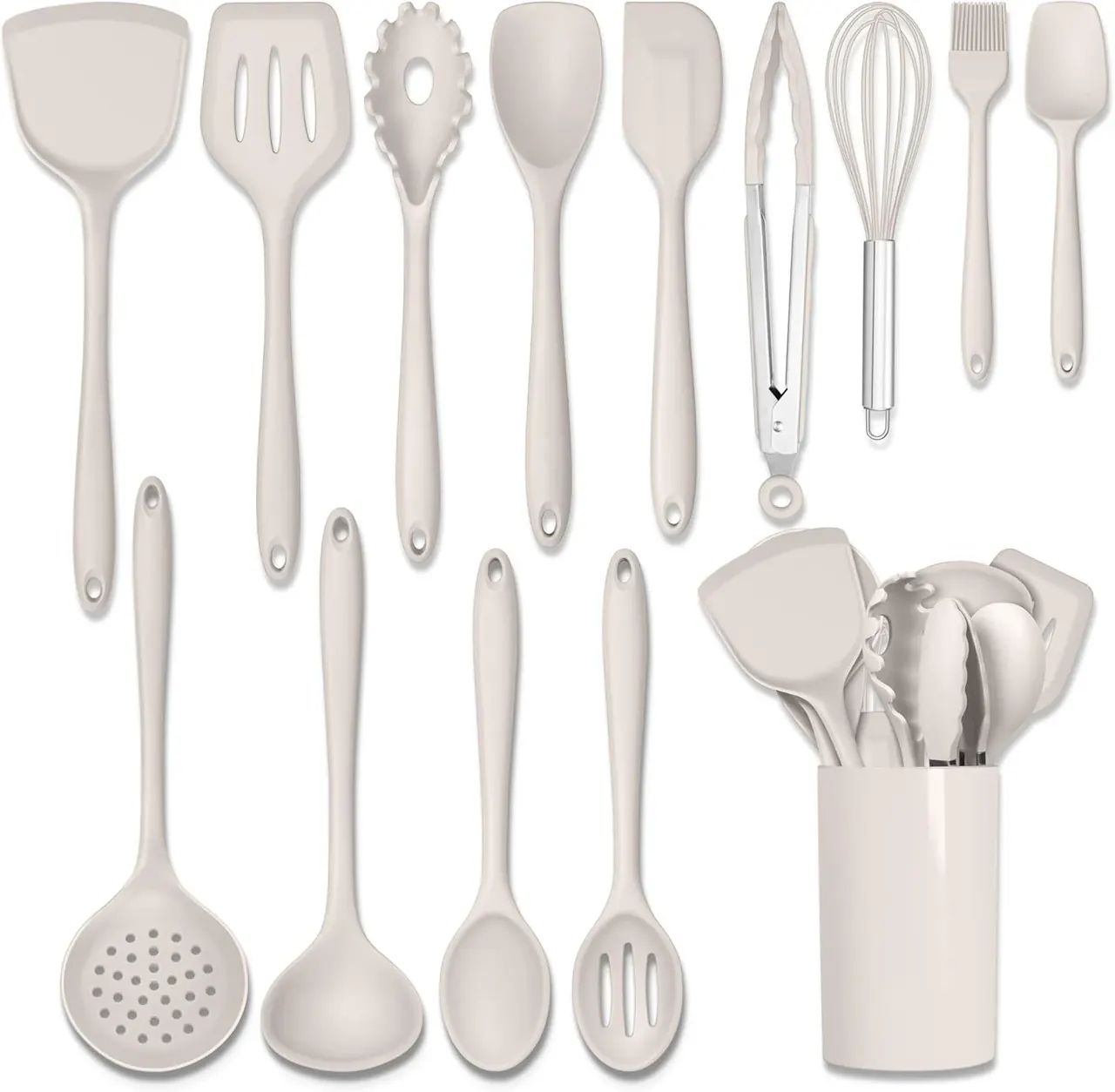
Our honest guide to best kitchen tools to give as christmas gifts — what actually matters, what to skip, and how to choose well.
 Also Great
The best kitchen tools to give as Christmas gifts are the ones that solve a real problem in the recipient’s kitchen. I’d skip novelty and focus on tools that fit how the person actually cooks: a baker may get more use from a scale or dough scraper, while a weeknight cook may appreciate sturdy tongs, a flexible turner, or a reliable thermometer. A good gift should suit their space, cookware, hand strength, and tolerance for care.
When I’m choosing a kitchen gift, I start with habits, not the holiday. What does this person cook on repeat? What seems to slow them down? Which tools stay out on the counter, and which ones are buried in a drawer?
bomis Meat Shredder Claws, Pulled Pork Claws Tool, BBQ Grilling Gifts for Men, Stocking Stuffers Christmas Gifts for Men
Shop at Amazon →For beginners, simple foundational tools usually make the most sense. Accurate measuring spoons, kitchen shears, a heat-safe spatula, a whisk, or an easy-to-read thermometer can improve daily cooking without asking someone to learn an entirely new technique. For more experienced cooks, I look for a thoughtful upgrade or a tool tied to a clear interest, like baking, bread making, or vegetable prep.
Storage matters too. In a small kitchen, a compact scale or nesting prep tools often make more sense than a bulky set. A gift that needs permanent counter space should earn it.
Stainless steel is one of the safest gift choices because it’s durable, widely useful, and generally easy to care for. It works well for mixing bowls, measuring tools, strainers, whisks, and tongs. If I’m unsure what material the recipient prefers, this is usually where I start.

All-Clad Stainless Steel Tool Set
Shop at Amazon →It does have limits. Stainless steel utensils can scratch some nonstick or ceramic-coated cookware, so I’m careful with rigid metal turners or spoons if someone mostly cooks on delicate surfaces. In those kitchens, steel measuring tools or bowls are often the better match.
Care is usually straightforward: hand washing or dishwasher cleaning works for many pieces, though I still pay attention to seams, handles, and edges that might trap moisture or food.
Carbon steel can be a very smart gift, but only for someone who won’t mind the maintenance. It’s lighter than cast iron and valued for its ability to build seasoning over time, but it needs to be dried promptly and occasionally oiled to help prevent rust.
I wouldn’t choose carbon steel for someone who wants everything to go into the dishwasher or who gets annoyed by upkeep. For a cook who enjoys maintaining their tools, though, it can be a practical and lasting material.
Cast iron holds heat beautifully and can be genuinely useful in a home kitchen, but I think weight is the deciding factor here. A heavy pan or press can be difficult to lift, wash, or maneuver, especially for anyone with limited hand strength.
That’s why I treat cast iron as a specific gift, not a universal one. If the recipient likes low-maintenance tools or struggles with heavy cookware, I’d move on. If they enjoy slower, more hands-on kitchen care and are comfortable with the weight, it can be a thoughtful fit.
Ceramic and glass both have their place, especially for baking and oven-to-table use. Glass is helpful when seeing browning or bake progress matters, and it doesn’t tend to hold onto odors. Ceramic can be attractive and practical for baking dishes and serving pieces.
Both need a little caution. I pay attention to chipping, temperature changes, and the maker’s guidance on oven or stovetop use. Sudden thermal shock can be a problem, so these are best for cooks who are comfortable following care instructions closely.
These are the materials I think about for everyday utensils. Wood is comfortable in the hand and kind to coated pans, which makes it useful for spoons, spatulas, and cutting boards. It does need proper drying and usually shouldn’t live in the dishwasher.
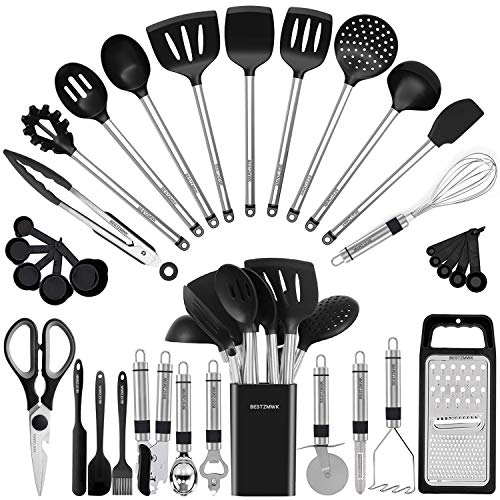
BESTZMWK 33-Piece Silicone Cooking Set
Shop at Amazon →Silicone is especially useful for spatulas, scrapers, trivets, and baking tools. I look for pieces with enough internal firmness to do real work, since a floppy spatula can be frustrating. Nylon can also be a sensible choice for nonstick cookware, though I’m mindful that it may warp or soften if left against high heat.
If the person you’re buying for uses mostly coated cookware, softer utensil materials are often the safest bet.
I find it easier to shop by kitchen task than by trend. A few categories tend to cover most good gift options.
I also like the idea behind The Kitchn’s holiday kitchen gift suggestions: the strongest gifts are often narrow in purpose but broad in use. A tool doesn’t need to do ten things. It just needs to do one or two common jobs very well.
A kitchen gift should still feel useful in February, not just festive in December. I pay close attention to construction and care because that’s what determines if something becomes part of a routine.
Heat resistance matters beyond the package claim. Handles can heat up, nylon can deform, and adhesives or joints can weaken near high temperatures. For food-contact tools, I avoid anything chipped, cracked, heavily scratched, or poorly finished.
Cleaning is a major part of usability. Dishwasher-safe can be convenient, but it isn’t automatically better. Wooden handles, sharp edges, carbon steel, and some finishes may need hand washing. I think about the person’s actual cleanup style before choosing something fussy.
For electronic tools, I prefer straightforward battery access, obvious cleaning boundaries, and controls that are easy to read. The more complicated a tool is to maintain, the less likely it is to become a favorite.
The most common mistake is buying for a fantasy version of the cook instead of the real one. A specialized gadget for a technique they’ve never mentioned may look thoughtful, but it often ends up as drawer clutter.
I also try to avoid duplicates. Many home cooks already own too many spatulas, measuring cups, and wooden spoons. If I’m considering a common category, I’d rather choose a clear upgrade than add another average version.
Another easy miss is ignoring fit. A tool may be well made and still be wrong for the recipient because it’s too large for their drawers, too heavy for comfortable handling, or too narrow in the grip. Accessibility matters. Broad handles, non-slip surfaces, lighter weight, and easy-release mechanisms can make a tool much more usable.
If you want a gift to feel personal, I think the best approach is to pair usefulness with a known habit. A baker may appreciate a practical baking tool plus a handwritten recipe. A friend who hosts often may prefer serving pieces or trivets that work at the table. Even marketplaces like Etsy’s kitchen gift listings can be helpful for inspiration, but I’d still filter every idea through storage, care, and everyday usefulness.
The best ones help with a task the recipient already does often, like measuring, whisking, baking, prepping vegetables, or checking temperature. I’d prioritize intuitive use, easy cleaning, and materials that suit their cookware.
Useful options include a cutting board, scale, thermometer, tongs, grater, or prep tool that improves a regular routine. The key is choosing something that fills a gap instead of duplicating what they already own.
Bakers usually benefit most from tools that improve consistency, like a scale, dough scraper, cooling rack, oven thermometer, or sturdy measuring tools. I like gifts that help repeat favorite recipes more reliably.
Smaller gifts can still be very useful: a silicone spatula, bench scraper, measuring spoons, kitchen shears, or a wooden spoon can all make sense. A modest gift feels more thoughtful when it matches the person’s cooking style and doesn’t create extra clutter.
The best kitchen tools to give as Christmas gifts are practical, durable, and easy for the recipient to use in their real kitchen. I’d choose the cook first, the material second, and the holiday theme last; that’s usually what turns a gift into something they reach for all year.

Paige Gilmore
Founder of Stripes & Willows — recipe creator, food photographer and stylist. Every guide is written to make honest, useful kitchen decisions easier.
More about Stripes & Willows →This page contains affiliate links. If you buy through them, Stripes & Willows may earn a commission at no extra cost to you — it never affects what we recommend.


