From This Page
The best loaf pans for Christmas baking are sturdy light-colored metal pans in the right size for your recipe, with mini paper pans as the most convenient option for gifting. I treat pan choice as part of the bake itself, because size, material, and even pan color change how a loaf browns, rises, and releases. If I want the simplest path to reliable holiday quick breads, I stick with straight-sided metal, fill it about two-thirds full, and cool the loaf completely before wrapping.
Before material comes into play, size matters most. A standard loaf pan is often around 8 1/2 by 4 1/2 inches or 9 by 5 inches, and those are not equal in capacity. A batter baked in a wider pan will sit shallower, bake faster, and usually rise a bit lower. That is one of the easiest ways to end up with dry edges and an underwhelming loaf.
For Christmas baking, I like to match the pan to the recipe exactly when I can, especially for fruitcake, pumpkin bread, gingerbread loaves, and other dense seasonal batters. If I need to swap, I check capacity rather than trusting the label. A simple way to do that is to fill the pan with water and measure the water in a liquid measuring cup.
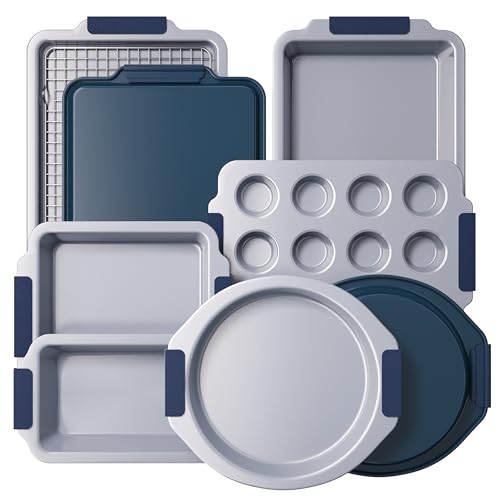
Mini loaf pans are especially useful during the holidays. They bake faster, portion neatly, and make gift giving easier. I still leave room for expansion and set small or flexible pans on a sheet pan before filling them. If you are comparing options, seasonal collections of holiday loaf pans in different sizes are a good reminder of how much dimensions can vary.
For most Christmas baking, light metal is the pan I would choose first. It heats efficiently, encourages even browning, and gives quick breads a well-shaped loaf with a defined crust. That matters for recipes like cranberry-orange bread, banana bread, spiced apple loaves, and chocolate holiday cakes where you want the center set without overdoing the edges.
Light aluminum or similar metal pans are especially forgiving if you bake a mix of sweet loaves through the season. They tend to brown more predictably than dark pans, and they make it easier to judge doneness from both color and texture.
The most common mistake with metal pans is assuming all metal behaves the same. Dark nonstick pans can brown much faster, particularly around the corners and bottom. If I am using a darker pan, I start checking early and watch closely for overbrowning. A loaf can look finished on the outside while the center is still too wet.
Release also matters. I grease the pan and usually line the bottom and long sides with parchment so I can lift the loaf out cleanly once it has cooled briefly. That is particularly helpful for gift loaves, because a torn side or stuck bottom makes wrapping harder and the finished loaf less tidy.
Glass loaf pans can bake beautiful holiday breads, but they need a little more attention. Glass heats more gradually than metal and holds heat longer once out of the oven. That can mean a softer crust and a center that takes longer to finish baking.
For moist holiday batters, that slower heat transfer can be helpful, but I do not rely on color alone to tell me when the loaf is done. A skewer near the center, avoiding fruit or chocolate pockets, gives a better read. So does a gentle press on top; the center should spring back rather than sink.
The bigger issue with glass is temperature shock. A hot glass pan should not go onto a cold, wet, or stone surface. That kind of sudden change can crack bakeware. It is also worth checking the manufacturer instructions, since oven limits and preheating guidance can vary. General bakeware safety guidance from the USDA food safety basics is also a useful reminder that cooling and handling matter just as much after baking as during it.
Ceramic loaf pans share some traits with glass. They warm more slowly than metal and hold heat well, which can produce a softer crust and a slightly gentler bake. For holiday tables, ceramic also has the advantage of going from oven to table neatly.
Where ceramic can be trickier is consistency. Decorative pans vary in thickness, shape, and heat retention, so baking times can shift more than expected. I treat ceramic as a pan that needs close observation rather than strict faith in the recipe clock.
As with glass, abrupt temperature changes are the main thing to avoid. A hot ceramic dish should rest on a dry towel, rack, or other suitable surface rather than something cold. And because many Christmas loaves are high in sugar, I keep an eye on the top and tent loosely with foil if it is coloring too fast while the middle still needs time.
Silicone loaf pans are appealing because they release well and are easy to store. For some batters, especially tender quick breads, that easy release is genuinely helpful. But silicone is flexible, and that flexibility can work against you with taller or heavier holiday loaves.
A full silicone pan is awkward to move safely unless it is sitting on a sheet pan from the start. Without that support, the batter can shift, the sides can bow, and the loaf may bake less evenly. I would be especially cautious with dense fruit loaves or anything with lots of add-ins.
Silicone also benefits from a little patience after baking. Let the loaf cool enough to firm up before unmolding, or the sides can compress and leave you with a misshapen gift loaf.
For bake-and-give Christmas breads, disposable paper loaf pans are the most practical choice. They simplify the whole handoff: bake, cool, wrap if needed, and pass along the loaf in its own container. That is useful for teacher gifts, neighbor plates, and cookie-box style assortments with a quick bread tucked in.
The important detail is making sure the paper pan is specifically labeled oven-safe. Decorative holiday packaging is not automatically meant for baking. The FDA’s food handling guidance is a good baseline reminder to use food-safe materials and to handle finished baked goods carefully once they are cooled and packaged.
I also would not overfill paper pans. They need headspace, and they always bake more neatly when set on a sturdy sheet pan for support. Some release cleanly without greasing, but sticky, high-sugar batters may still benefit from a light coating if the packaging instructions allow it.
If you are shopping by shape or volume, online assortments of gift-ready Christmas loaf pans can help you compare capacities before you commit.
Even the best loaf pan can give disappointing results if it is not prepared properly. For most holiday quick breads, I grease the pan and use a parchment sling across the bottom and long sides. That makes removal cleaner and keeps the loaf from breaking when I lift it out.
I also try not to leave a finished loaf in the pan too long. About 10 to 15 minutes is usually enough for it to settle and pull away slightly from the sides. After that, moving it to a rack helps prevent condensation from softening the crust.
For gifting, cooling completely is non-negotiable. Warm loaves release steam, and trapped steam creates soggy wrapping, damp crusts, and shorter storage life. Once fully cool, I wrap tightly if freezing, or package in a food-safe bag or box if giving within a few days.
Between holidays, loaf pans last longer when cleaned gently and stored without heavy items pressing into them. I avoid abrasive scrubbers on coated or decorative finishes, and I never shock hot pans with cold water. If a pan is warped, deeply rusted, cracked, or shedding coating, it is time to replace it.
Light-colored metal loaf pans are the best all-around choice for most Christmas breads and cakes. They brown reliably, bake evenly, and are easier to judge than glass, ceramic, or silicone.
Yes, as long as the packaging clearly states that they are oven-safe. I would place them on a sheet pan for stability, avoid overfilling, and let the bread cool fully before adding a lid or wrap.
It depends on the kind of gift. Smaller pans holding around 1/2 to 1 cup of batter work well for individual portions, while larger mini pans in the 1 1/2 to 2 cup range feel more generous and shareable.
Sometimes. Many are designed to release well on their own, but sticky batters with a lot of sugar or fruit can benefit from light greasing if the pan instructions allow it.
Cool the loaf completely first. Then wrap it in a food-safe layer such as parchment, plastic, or a bakery bag, and add a decorative outer layer if you like. I also think it is helpful to include the loaf name, allergens, and basic storage notes.
If I were choosing one pan style for Christmas baking, I would go with a sturdy light metal loaf pan in the exact size the recipe calls for. For gifting, oven-safe paper loaf pans are the easiest extra to keep on hand, as long as you support them well and cool every loaf completely before wrapping.
This page contains affiliate links. If you buy through them, Stripes & Willows may earn a commission at no extra cost to you — it never affects what we recommend.