Guide
Best Muffin Pans To Give As Christmas Gifts
Our honest guide to best muffin pans to give as christmas gifts — what actually matters, what to skip, and how to choose well.
Our honest guide to best muffin pans to give as christmas gifts — what actually matters, what to skip, and how to choose well.
The best muffin pan to give as a Christmas gift is usually a sturdy standard 12-cup metal pan with a shape that’s easy to grip and easy to clean. It suits the widest range of bakers, works for far more than muffins, and feels useful long after the holiday decorations are packed away. If I’m choosing for a very specific kind of cook, though, material and size matter just as much as looks.
A muffin pan is one of those pieces of bakeware that earns its place quickly. It can handle blueberry muffins, cupcakes, cornbread, mini frittatas, baked oatmeal, egg bites, and small savory bakes, so it doesn’t feel like a single-purpose present. That versatility makes it a stronger gift than a novelty holiday pan that only comes out once a year.

Great Jones Stud Muffin
Shop at Great Jones →I think the smartest approach is to match the pan to the recipient’s actual habits. A frequent baker may care most about even browning and sturdy construction. A beginner may be happier with simple release, clear care instructions, and a format that fits common recipes. For many home kitchens, a standard 12-cup pan is still the easiest choice because so many recipes are written for it, including guidance from baking resources like King Arthur Baking.
Before material, I look at capacity. Standard, mini, and jumbo pans all have their place, but they serve different routines.
A standard 12-cup pan is the most practical all-purpose gift. It fits everyday recipes and makes a reasonable batch size for most households.
A mini muffin pan is helpful for party food, lunchbox portions, and bite-size bakes, but it’s more specialized.
A jumbo pan suits someone who likes bakery-style muffins and has space to store larger bakeware.
One common mistake is assuming any muffin recipe can move from one pan size to another without adjustment. It usually can, but baking time changes, and sometimes the finished texture does too. Smaller cavities bake faster; larger ones need more time and careful checking in the center.
If I’m buying a gift for someone and I don’t know their preferences in detail, metal is the safest choice. It’s dependable, widely useful, and generally the best fit for classic muffins and cupcakes.
Aluminized steel and similar metal constructions tend to give a good balance of strength and responsive heating. Metal also encourages better browning than silicone, which matters if the recipient likes domed tops and lightly crisp edges.

Caraway Home 6 Cup Muffin Pan Slate
Shop at Caraway Home →I pay attention to a few construction details:
A broad rim makes the pan easier to lift with oven mitts.
Heavier gauge construction helps resist flexing and warping.
Rolled or reinforced edges usually make a pan feel steadier when full.
Lighter-colored metal often browns more gently than very dark finishes.
The main downside is that some metal pans need a bit more care with greasing and cleanup, especially if they don’t have a release-friendly coating. It’s also worth remembering that dark metal can brown edges faster, so some recipes may benefit from a slightly reduced oven temperature when the recipe writer allows for that adjustment.
Nonstick is a practical gift for newer bakers or anyone who wants easy release and easier cleanup. Delicate cupcakes, fruit-heavy muffins, and sticky batters can all come out more cleanly with less fuss.
That convenience comes with trade-offs. Nonstick surfaces need gentler care, and they don’t respond well to metal utensils, abrasive scrubbers, or rough stacking in crowded cabinets. Even when a manufacturer says dishwasher-safe, hand-washing is often the kinder option if the goal is to preserve the finish as long as possible.
I also wouldn’t assume nonstick means no preparation at all. Liners or a light coating of fat can still help when recipes contain lots of sugar, jam, or caramelized edges.
Silicone can be a thoughtful gift for someone who values easy release above all else. Muffins and egg bites often pop out neatly, and the pan itself is light and simple to store.
Still, silicone has a few limits that matter in daily use. It’s flexible, which means it needs support. I’d always want the recipient to know that a silicone muffin pan should sit on a rigid sheet pan before it’s filled and moved to the oven. That one detail makes silicone much less awkward to use.
Compared with metal, silicone usually gives less browning. The results can be softer and paler, which some bakers won’t mind and others definitely will. Warm baked goods can also be more delicate when unmolding, so it helps to let them cool a bit longer first. The FDA’s food materials guidance is a good general reference for anyone curious about food-contact materials in the kitchen.
Cast iron is a better gift for an experienced cook than for a casual baker. It holds heat exceptionally well and can produce deep browning and a very steady bake once fully heated.
What makes cast iron appealing also makes it less universal. It’s heavy, it needs seasoning, and it should be dried thoroughly after washing to help prevent rust. That’s not difficult for someone who already likes cast iron cookware, but it can feel like extra maintenance for a person who just wants a quick batch of muffins on a weekday morning.
I’d only choose cast iron if I already knew the recipient appreciates that style of cookware and has no problem with the weight.
Ceramic and glass muffin pans tend to be chosen for appearance as much as function. They can be attractive, giftable, and nice for someone who likes bakeware that can go from oven to table.
Practically, they need a little more caution. These materials usually heat more gradually than thinner metal, and they don’t like sudden temperature changes. A hot ceramic or glass pan shouldn’t go onto a cold or wet surface, and the recipient should follow the maker’s temperature guidance carefully. General ovenware safety advice from Consumer Reports and standard kitchen safety guidance from USDA safe food handling resources both support that kind of careful temperature transition with bakeware.
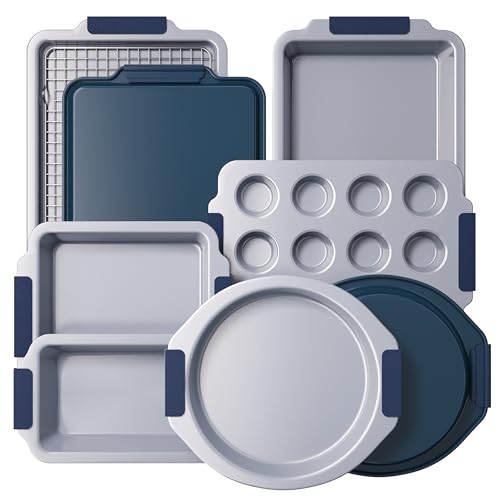
BRONYPRO Ceramic Bakeware Set
Shop at Amazon →I also think storage matters here. Thick walls and decorative shapes can look lovely but take up more room and can be heavier than expected.
Beyond material, I look for signs that a pan will be pleasant to use. A muffin pan can be made from the right material and still be annoying if the shape or build is poor.
Flat, stable construction matters. A pan should sit evenly rather than rock.
Smooth interiors are easier to clean than deep seams and tight corners.
A wider rim helps with safe handling when the cups are full.
Reinforced edges usually make the whole pan feel less flimsy.
A common gifting mistake is focusing only on a decorative pattern. Narrow corners, unusual shapes, and sharply defined details can make batter harder to portion, release more difficult, and scrubbing much more annoying.
A muffin pan on its own is useful. A muffin pan with one small, thoughtful addition feels much more like a Christmas gift.
I like the idea of pairing it with one or two practical extras rather than a huge bundle. A handwritten recipe card, festive paper liners, or a jar of pre-measured dry ingredients keeps the gift warm and personal without turning it into clutter. If the recipient is new to baking, a simple recipe is often more helpful than extra tools.
For a more experienced baker, I’d keep the add-ons minimal and useful. The pan itself should still be the main event.
If I were giving a muffin pan as a gift, I’d include a quick note with a few care basics. That’s especially helpful when the material needs more attention than standard bakeware.
Let the pan cool before washing it.
Use warm water, mild soap, and a soft sponge for most finishes.
Avoid abrasive cleaners on nonstick or ceramic surfaces.
Dry uncoated metal and cast iron promptly.
Never shock hot glass or ceramic with cold water or a cold countertop.
Store the pan flat if possible to help preserve its shape.
These are small details, but they help prevent the most common problems: stains, rust, chipped coatings, and warping.
For most people, a sturdy standard 12-cup metal pan is the best choice. It’s versatile, familiar, and useful for both sweet and savory baking.
Yes. They’re practical, easy to use year-round, and useful for much more than muffins. The gift feels more thoughtful when paired with a recipe card or liners.
In most home kitchens, the terms are used interchangeably. The pan shape is usually the same, while the difference comes more from the recipe and how the finished bake is presented.
It depends on the baker. Nonstick is easiest for release, silicone is flexible and low-fuss to unmold, and cast iron is best for someone who values heat retention and doesn’t mind extra care.
A standard 12-cup pan is the most useful everyday size. It matches many recipes and works well for regular family baking.
If I’m choosing one muffin pan to give at Christmas, I’d keep it simple: standard size, sturdy build, and a material that fits the recipient’s habits. A practical pan with a small personal touch is far more likely to be used and appreciated than something fussy or overly seasonal.

Paige Gilmore
Founder of Stripes & Willows — recipe creator, food photographer and stylist. Every guide is written to make honest, useful kitchen decisions easier.
More about Stripes & Willows →This page contains affiliate links. If you buy through them, Stripes & Willows may earn a commission at no extra cost to you — it never affects what we recommend.
