From This Page
 Best Value
Recommended by Stripes & Willows


 Best Value
Best Value
Best Value
If I’m choosing a pie dish for fall baking, I keep it simple: metal is best when I want a deeply browned, crisp crust; glass is best when I want to see how the bottom is coloring; ceramic or stoneware is best for steady baking and a pie that stays warm at the table. The right pick depends less on the season itself and more on the filling, the depth of the dish, and how much moisture the pie brings into the oven.
Fall pies ask a lot from a baking dish. Apple and pear fillings release juice, pumpkin custard needs gentle heat, and deep holiday pies can go from perfect to underbaked in the center faster than most recipes admit. What matters most is matching the dish material and size to the pie, then managing the crust so it stays crisp and structured.
When crust color is my top priority, I lean toward metal. It conducts heat efficiently, which helps the bottom and sides brown more quickly than thicker, slower-heating materials. That can make a real difference with juicy fruit pies, where excess moisture is the main threat to a crisp base.
Metal is especially helpful for apple, pear, and mixed-fruit pies because these fillings bubble hard and can keep the lower crust damp if the pan doesn’t move heat quickly enough. A good pie dish still won’t fix an overly wet filling, but metal gives the crust a stronger chance.
The trade-off is that the rim can brown faster than the center finishes baking. I keep an eye on the edges and add a foil shield once the crust reaches a rich golden color. A lower oven rack also helps direct more heat to the bottom crust instead of over-coloring the top too soon.
Material really does change the result. This pie plate comparison gives a useful overview of how metal, glass, and ceramic affect browning and baking behavior.
Glass earns its place because it lets me check the bottom and sides of the crust without guessing. That’s useful for fruit pies, where bubbling filling can make a pie look done before the crust actually is. If I can see a pale base, I know it needs more time.
For beginners, glass can be reassuring. You get a clearer sense of what “done” looks like, especially with standard 9-inch pies. It’s also helpful when switching between recipes, since some pies need a fully baked crust while others are fine with a lighter finish.
Glass can bake a bit differently from thinner metal pans, so I follow the recipe closely and stay flexible on timing. If the crust still looks pale near the end, I give it more time rather than pulling it based only on the clock.
Care matters here too. Hot glass should not go onto a cold, wet, or stone surface. Sudden temperature changes can cause breakage, and that’s not a risk I want anywhere near a finished pie.
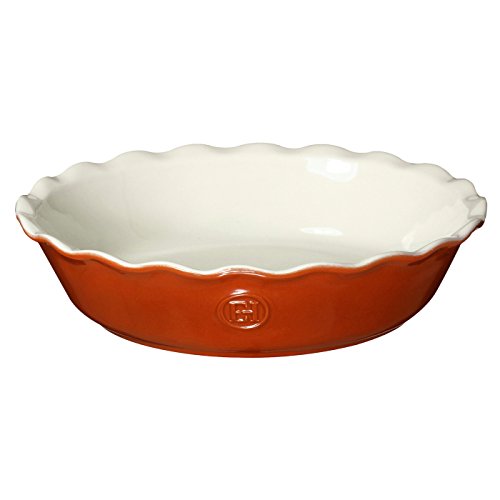
Ceramic and stoneware are the pie dishes I think of for classic fall baking: pumpkin, apple, sweet potato, pecan. They heat more gradually and hold warmth well, which suits pies that benefit from a gentler, more even bake.
I like these materials for serving because they carry heat to the table nicely, but they can leave the bottom crust a little lighter than metal. That doesn’t mean they’re a poor choice. It just means I’m more careful about oven setup. A fully preheated oven and a lower rack help quite a bit.
These dishes are also worth handling carefully after baking. Moving a hot ceramic or stoneware dish onto a cold surface can lead to thermal shock. I let the dish cool on a rack or folded towel and avoid abrupt changes in temperature.
For custard pies, the steady heat is a plus. Pumpkin filling, in particular, benefits from not being pushed too aggressively. The goal is a set outer ring with a slight wobble in the center, not a rigid top that later cracks.
A “9-inch pie dish” sounds straightforward, but the actual capacity can vary quite a bit. Some dishes are shallow and sloped, others are deep with straighter sides. That changes how much filling fits, how long the pie bakes, and how likely it is to boil over.
I look at two things: diameter across the inside and depth at the center. If I’m using a deeper dish than the recipe expects, I assume I may need more filling and more baking time. If I’m using a shallower one, I’m careful not to overfill it just because the recipe technically fits on paper.
Deep-dish pies are appealing in fall, especially for apple and pumpkin, but they need more patience. The center can lag behind while the rim browns early. This is where foil shields, lower rack placement, and visual cues matter more than exact timing.
Rim shape helps too. A broad rim gives me room to crimp neatly and makes it easier to protect the edge mid-bake. Narrow rims can work, but they leave less margin for error if the dough shrinks or slides.
The pie dish matters, but crust problems usually start elsewhere: warm dough, excess liquid, or not enough bake time. For reliable results, I focus on a few habits that do more than any single pan can.
For blind baking, I line the crust and use weights so the sides don’t slump. After the weights come out, I keep baking until the base looks dry rather than soft and pale. That extra few minutes can make the difference between a crisp slice and a soggy one.
A lot of common crust problems are covered well in this pie crust troubleshooting guide, especially slumping, shrinkage, and underbaked bottoms.
Different fillings ask for different strengths from the dish.
With roasted squash or sweet potato fillings, I try to remove excess moisture before the pie even reaches the dish. Roasting first, then cooling and puréeing, gives a thicker, more concentrated filling than starting with watery cooked vegetables.
The most common fall pie issues are familiar: soggy bottoms, cracked custards, and overflowed fruit filling. Most of them come back to heat management and patience.
If the bottom crust is pale, I usually suspect one of three things: the dish didn’t conduct enough heat, the filling was too wet, or the pie simply needed more time. A lower rack and proper thickener help. So does not pulling the pie the minute the top looks done.
If a custard cracks, it was likely baked too long or at too aggressive a temperature. I take pumpkin and similar pies out when the center still has a slight wobble. Residual heat finishes the job as the pie cools.
If fruit filling boils over, the dish may be too shallow or too full. I like setting the pie on a lined baking sheet to catch drips and make oven cleanup easier. A few vents in the top crust also help steam escape instead of pushing juices over the rim.
This pie troubleshooting guide lines up closely with the issues that show up most often in fall baking: cracked custards, soggy bottoms, slumping crusts, and over-browned edges.
Once the pie is baked, the dish still matters. Fruit pies need time to cool so the juices thicken. Custard pies need time to finish setting. Cutting too soon can undo careful baking, no matter how good the crust looked coming out of the oven.
For cleanup, I let the dish cool fully before soaking it in warm soapy water. Baked-on fruit syrup usually loosens with time better than with force. I avoid abrasive scrubbers, and I’m especially cautious with hot glass, ceramic, and stoneware because sudden temperature changes can cause damage.
Custard and cream pies should be refrigerated after cooling. Fruit pies can sit out for a short serving window, but I refrigerate them if the kitchen runs warm or the recipe advises it. For leftovers, gentle reheating helps revive the crust better than serving straight from the fridge.
A standard 9-inch dish works for many recipes, but depth matters just as much as diameter. If a dish is deeper than average, it may need more filling and a longer bake time.
It depends on the result I want. Metal is best for browning, glass is best for checking doneness visually, and ceramic or stoneware are best for gentle, even baking and heat retention.
Use the right thickener, don’t overload the dish with wet filling, and blind bake when the recipe calls for it. Baking on a lower rack and shielding only the rim, not the whole pie, also helps the crust stay crisp.
Yes, as long as the substitute is oven-safe and close in capacity to the recipe’s intended pan. A cake pan, shallow baking dish, or skillet can work, but baking time and crust shape may change.
The best pie dish for fall baking depends on what you bake most often. If I had to narrow it down, I’d use metal for crisp fruit pies, glass when I want a clear view of doneness, and ceramic or stoneware for classic custard and holiday pies. The dish matters, but matching it to the filling matters more.
This page contains affiliate links. If you buy through them, Stripes & Willows may earn a commission at no extra cost to you — it never affects what we recommend.