If you’re cooking two Thanksgiving turkeys, the best roasting pans are sturdy, moderately shallow pans that fit your oven with real breathing room around each bird. I’d choose one properly sized pan per turkey whenever possible, use racks to keep the birds above the drippings, and plan around airflow, safe lifting, and thermometer checks rather than trying to force the largest pans that will technically squeeze inside the oven.
1. Heavy Stainless Steel
For cooking two turkeys at once, heavy stainless steel is the material I like best on paper because it solves the most practical problems at the same time. It tends to hold its shape well under the weight of a full bird, gives you a sturdy base for moving hot drippings, and transitions neatly into gravy-making once the turkeys are resting.
When you’re managing two pans in one oven, stability matters as much as browning. A pan that warps, bends, or flexes is harder to rotate safely and more likely to slosh hot fat when you pull it forward. That’s why I’d skip anything flimsy unless it’s set inside a rigid support pan. This roasting-pan buying guide makes the same general point: material and thickness affect both cooking performance and handling.
The shape matters too. I prefer a pan that’s shallow enough to allow heat to circulate around the turkey instead of trapping steam. High sides can shield parts of the bird and slow browning, which becomes more noticeable when the oven is already crowded with two roasts.
What to look for here:
- Rigid construction that won’t buckle under a loaded turkey
- Shallower sides for better airflow and browning
- Handles you can grip securely with oven mitts
- A removable rack so the bird sits above the drippings
2. Heavy Carbon Steel or Other Dark Metal
Dark metal roasting pans can work very well for turkey, especially if you like stronger browning on the skin. In a two-turkey setup, that extra browning can be helpful if one bird is roasting in a slightly cooler zone of the oven. The tradeoff is that dark metal can brown faster, so I’d keep a closer eye on color and tent with foil if one turkey starts getting ahead of the other.
This is where pan depth and oven placement really start to matter. A dark metal pan parked too close to an oven wall or heating element may deepen color faster than you want. If one turkey browns unevenly, I’d rotate the pan front to back first before changing the temperature. For two birds, a calm adjustment beats a dramatic one.
These pans make the most sense when:
- You want stronger surface browning
- The pan is still heavy enough to move safely
- You have enough oven clearance to rotate or swap positions
If the skin darkens faster than the meat finishes, loosely tent just that bird with foil. I would not wrap it tightly, since trapped steam softens the skin.
3. Aluminum Roasting Pans
Aluminum is the most mixed category for this job because it ranges from solid, dependable roasting pans to very flimsy disposable ones. A heavy-gauge aluminum pan can be perfectly useful for two Thanksgiving turkeys if it fits the bird well and feels stable on the rack. A thin disposable pan, on the other hand, is where I’d be cautious.
With two loaded pans, you already have more oven traffic, more drippings, and more chances for awkward lifting. Thin aluminum can bend when full, and that’s exactly the moment you do not want a pan to fail. If disposable is the only option, I’d treat it as an insert and give it firm support underneath.
For best results, the pan should match the turkey rather than dwarf it. A too-small pan crowds the bird and can spill; a too-large pan lets drippings spread and burn. General turkey pan-size guidance is useful here, but with two birds the oven dimensions matter just as much as the turkey weight.
4. Disposable Foil Pans
I’d place disposable foil pans last for this particular task. They can be useful in a pinch, but cooking two turkeys is already a heavier, fussier setup than roasting one bird. You need confidence when sliding pans across the rack, rotating positions, and pouring off drippings, and disposable foil simply gives you less margin for error.
If you do use them, the main rule is support. Set the foil pan inside or on top of something rigid enough to keep it from bowing. Also make sure the rim stays level as you move it. A turkey is heavy, and hot fat shifts quickly.
Another issue is shape. Many disposable pans have steeper sides and lighter construction, which can reduce airflow and make even roasting harder in a full oven. When you’re trying to cook two turkeys evenly, that’s not ideal.
How to Choose the Right Pan Size for Two Turkeys
The best roasting pan is not the biggest one you can buy. It’s the one that suits the bird and still leaves room in the oven for hot air to circulate. I’d test the empty pans in the oven before Thanksgiving morning, paying attention to three things: rack clearance, door closure, and the space between the pans and oven walls.
If both birds fit side by side on one rack with space between them, that can be a very workable arrangement. If they need separate racks, I’d make sure the upper pan is not blocking too much heat from the lower one. Better Homes & Gardens has similar advice on leaving room around each turkey rather than packing the oven tightly.
A few sizing rules help:
- Choose one pan per turkey whenever possible
- Keep the pan shallow enough for airflow
- Make sure handles do not interfere with oven walls or the door
- Leave several inches of space around the pans if your oven allows it
- Use a rack to lift the turkey above the drippings
What Matters More Than Material
Material is important, but for two Thanksgiving turkeys, setup is what usually determines success. Even the best pan cannot fix a cramped oven or two birds that are packed too tightly together.
I’d roast both turkeys at the same temperature, usually starting at a steady roasting range such as 325°F to 350°F, and treat them as separate roasts sharing one oven. That means checking each one with its own thermometer and accepting that they may not finish at exactly the same moment. Allrecipes’ turkey and gravy guidance is also a good reminder that the drippings are valuable, so a pan should make those easy to collect safely.
For the birds themselves, consistency helps. Similar size, same basic seasoning, and unstuffed cavities make timing more predictable. If one bird is much larger, I’d expect it to finish later and give it the easier-to-reach position in the oven.
Common Mistakes to Avoid
The biggest mistake is choosing pans based only on turkey size and forgetting oven space. Two individually suitable roasting pans can still be the wrong choice if they choke off airflow or prevent safe rotation.
I’d also avoid:
- Using very deep pans that encourage steaming instead of roasting
- Letting wings or legs press against the sides of the pan
- Adding so much liquid that the turkey effectively braises
- Assuming both birds will finish at the same time
- Relying on a fixed clock instead of checking internal temperature
If one turkey is done first, remove it, tent it loosely with foil, and let it rest while the second bird finishes. That resting window is useful, not a problem.
FAQ
Can you cook two turkeys at the same time in one oven?
Yes, as long as both pans fit with proper clearance and the racks can support the weight safely. I’d use separate thermometers and check each bird independently, since they rarely finish at the exact same time.
What size roasting pans are best for two Thanksgiving turkeys?
The best choice is one properly sized pan per turkey, matched to each bird and your oven interior. I’d favor shallow, sturdy pans with racks over oversized or very deep pans that reduce airflow.
Do two turkeys take longer to cook than one?
Not twice as long, but they can take longer than a single bird because two cold turkeys pull more heat from the oven at the start. I’d begin checking early and rely on internal temperature rather than the clock.
Should two turkeys be cooked on separate oven racks?
They can be, if both birds still have clearance and you can rotate or swap pans safely. If separate racks create poor airflow or place one turkey too close to a heating element, side-by-side on one rack is often the better setup.
What should go in the bottom of the roasting pan?
A rack is the most useful thing to add. You can also add a small amount of aromatics or a little stock for drippings, but I would not fill the pan deeply with liquid because that encourages steaming and softer skin.
The Bottom Line
For two Thanksgiving turkeys, the best roasting pans are sturdy, shallow, and appropriately sized for each bird and for your oven. If the pans allow airflow, safe lifting, and easy temperature checks, you’re setting yourself up far better than any oversized or flimsy option could.
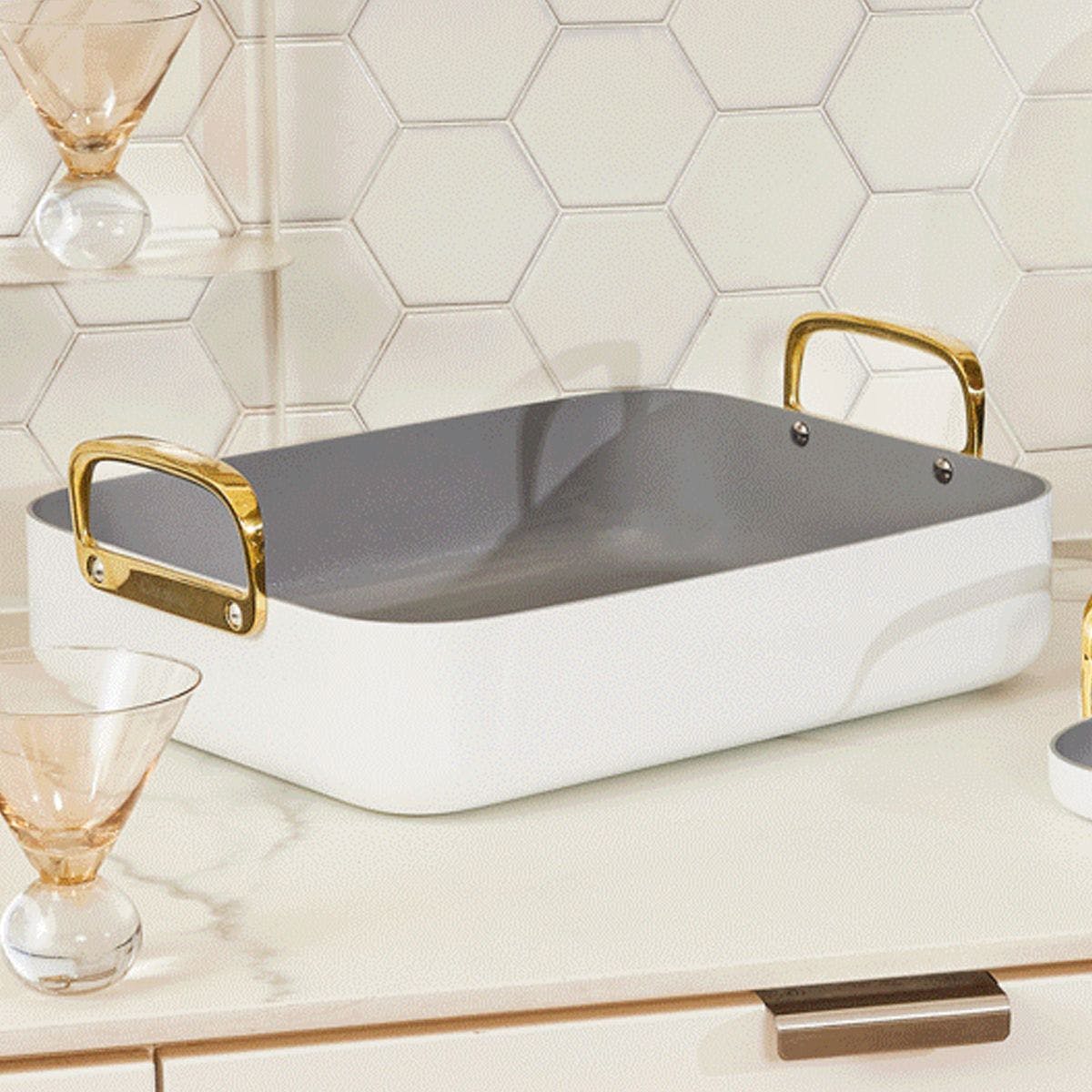 Best Premium
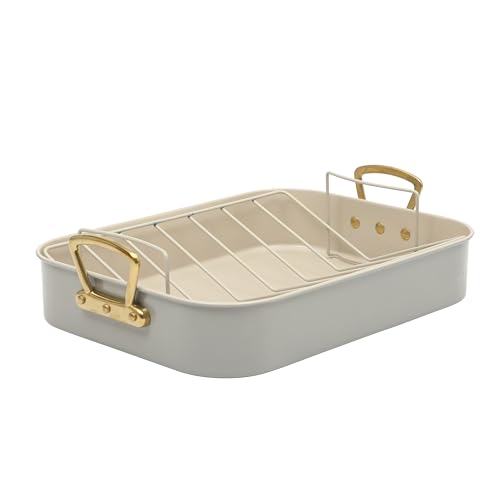 Best Value
 Also Great