From This Page
 Best Value
Recommended by Stripes & Willows


 Best Value
Best Value
Best Value
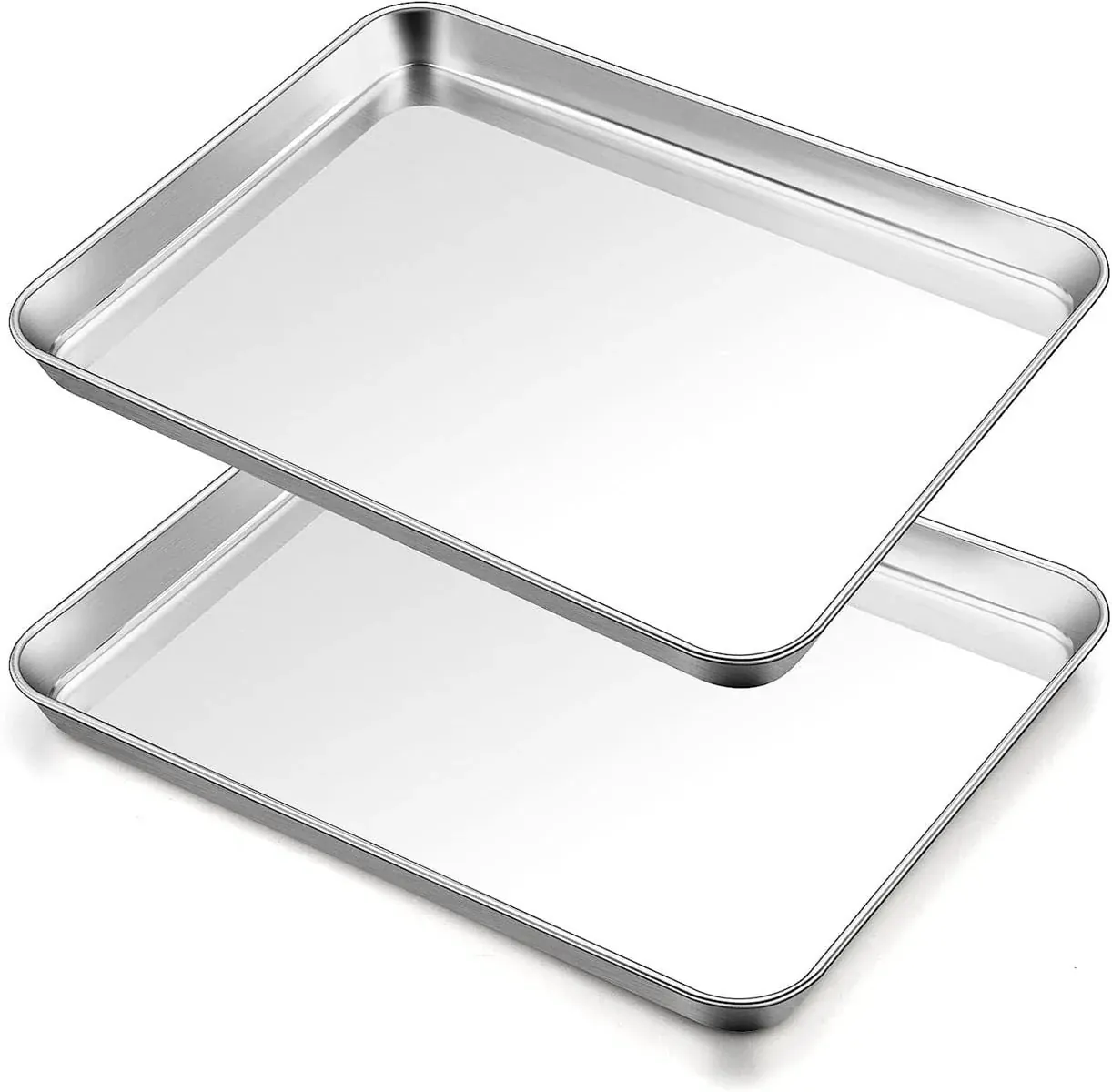
For Christmas baking, the best cookie sheets are sturdy, light-colored aluminum sheets that heat evenly, brown cookies predictably, and work across most holiday doughs. If I were keeping a holiday setup simple, I would prioritize two or three dependable sheets, parchment paper, and the habit of loading dough onto a fully cooled pan between batches.
Holiday cookie baking asks a lot from a pan. One tray might hold thin sugar cookies that need pale bottoms, while the next carries gingerbread or chocolate dough that can go from just-right to overbrowned in a minute. The pan material, its color, its thickness, and even whether it is still warm from the last batch all affect spreading, browning, and release.
The good news is that you do not need a complicated collection. A small group of reliable pans, used thoughtfully, will usually do more for your cookies than constantly switching surfaces. A helpful overview of baking sheets and cookie sheets also points out that pan style matters less than understanding how each one behaves in the oven.
Light-colored aluminum is the most versatile option for Christmas cookies because it conducts heat efficiently without pushing the bottoms toward deep browning too quickly. This is the pan material I would want for sugar cookies, shortbread, spritz cookies, and most cutout doughs where clean edges matter.
The color matters almost as much as the material. Pale pans tend to brown more evenly, while very dark pans absorb more heat and can make cookie bottoms color faster than the tops are ready. Thickness matters too. A sturdier sheet is less likely to flex or warp suddenly in a hot oven, and it generally gives more stable results batch after batch. This cookie sheet guide does a nice job explaining why pan color and gauge change baking results.
For most home bakers, this is the safest starting point. If a recipe was developed with a standard pale metal sheet in mind, aluminum is usually the closest match.
Steel cookie sheets can be sturdy and long-lasting, and they often hold their shape well. In practice, though, they may not respond exactly like aluminum, so the first batch deserves extra attention. I would rely less on the clock and more on visual cues: set edges, a dry-looking surface, and the first signs of color at the bottoms.
Steel can be a good choice for bakers who want substantial pans, but it helps to know your oven. If you already have hot spots, a heavier steel sheet may still bake well, though you may need to rotate the pan and start checking earlier than the recipe suggests.
This is where consistency matters more than perfection. Once you know how a steel pan handles your usual holiday recipes, it becomes easier to plan your timing.
Insulated pans are built to slow the transfer of heat to the dough. That can be useful for cookies that tend to overbrown underneath, especially in ovens that run hot or when baking a lot of sugar-heavy doughs.
The trade-off is texture and timing. Cookies on insulated sheets may need a little longer, and their bottoms can stay softer and paler. If I wanted a crisp base on shortbread or a cookie with pronounced browning at the edges, this would not be my first pick. But if burnt bottoms are your recurring December problem, insulated pans can be a practical correction.
The key is not to swap pan types midway through a recipe without expecting some change in bake time and color.
Nonstick sheets can be convenient, especially for sticky doughs or cookies with a lot of sugar. They release easily and keep cleanup straightforward. Still, the coating is the limiting factor. Scratches, peeling, or blistering are signs a pan is no longer worth using for holiday baking.
Even on a nonstick surface, parchment often makes life easier. It keeps delicate decorated cookies cleaner, reduces sticking, and can soften excess bottom browning. I would also avoid metal utensils and harsh scrubbing on coated pans, since damage tends to snowball once the surface is compromised.
If a coated pan starts showing exposed metal or flaking, it is time to retire it from cookie duty.
Material gets most of the attention, but pan size and edge style matter too. A standard half sheet offers enough room for even spacing and good airflow, while smaller sheets can crowd cookies and trap heat if you try to force a full batch onto them. A practical size guide is useful if you are trying to match a recipe to the pan you already own.
Rimmed baking sheets are easier to handle and keep parchment from shifting, which is especially helpful during big holiday baking days. Flat-edged cookie sheets make it easier to slide off cutout cookies or get a spatula underneath delicate pieces. Both can work well; the better choice depends on the style of cookie and how you plan to move it after baking.
If possible, bake one pan at a time on the center rack for the most even results. When you need to bake two trays, keep space between racks and rotate the pans halfway through.
A cool, clean pan gives dough the most predictable start. That matters more during Christmas baking than people realize, because repeat batches can go off track quickly if dough lands on a warm sheet.
Parchment paper is the easiest default for holiday cookies. It helps with release, keeps cleanup manageable, and can prevent bottoms from browning too aggressively. It is especially useful for decorated cutouts, sticky doughs, and anything fragile enough to break during transfer.
Silicone baking mats can also work, but they may slightly slow browning or change spread. If you start a recipe on parchment, I would stay with parchment for the full batch. Changing the surface halfway through can make the later trays look and bake differently.
Greasing should be minimal and intentional. Too much butter or spray can encourage spreading and leave cookies with greasy edges. Most Christmas cookie recipes do perfectly well with parchment and no additional fat on the pan.
The most common mistake is using a hot cookie sheet for the next round of dough. Butter-rich dough softens on contact, and that early melting often leads to excess spread before the structure has time to set. A second cool pan in rotation helps a lot during long baking sessions.
Another issue is overcrowding. It is tempting to fit one more row onto the tray during holiday baking, but cookies need room for heat and air to move around them. Crowded dough portions can merge, bake unevenly, and end up softer than they should be.
Darkened or damaged pans also cause trouble. A heavily stained pan may brown bottoms faster, and a warped pan can bake unevenly if it no longer sits level. If a pan rocks on the counter, has peeling coating, or has developed sharp exposed edges, it is not worth wrestling with during a big baking weekend.
Finally, moving cookies too soon can ruin a batch that was otherwise perfectly baked. Many holiday cookies continue setting on the hot pan after they come out of the oven. Let the edges firm up before transferring them, especially for shortbread, gingerbread shapes, and thin cutouts.
Good bakeware lasts longer with gentler care. For baked-on sugar or grease, warm water, mild dish soap, and a soft sponge are usually enough. For stubborn spots, a baking soda paste can help loosen residue without rough treatment. Food52 has a solid guide to cleaning cookie sheets gently that aligns with this approach.
The biggest thing to avoid is thermal shock. Do not run cold water over a hot pan or set a hot sheet on a wet, cold surface. That fast temperature swing is one of the simplest ways to warp a sheet.
Before storing, dry pans fully. If you stack them, place parchment or a soft cloth between coated surfaces to reduce scratching. Vertical storage is even better if you have the room, because it keeps pans easier to access without dragging them against each other.
Sturdy, light-colored aluminum sheets are the best all-around choice for most Christmas cookies. They support even browning, work well with many doughs, and are easy to line with parchment for cleaner release.
Only if the recipe specifically calls for it or the dough is likely to stick. In most cases, parchment is enough, and excess grease can make cookies spread more than intended.
A baking sheet usually has raised sides all around, while a cookie sheet often has one or more low or rimless edges for easier removal. In everyday cooking, the terms overlap, so the dimensions and edge style matter more than the label.
Light-colored aluminum is the most reliable choice for even browning and general versatility. Steel, insulated, and nonstick pans can all work well too, but they may require small adjustments in timing, browning expectations, or care.
If you want one answer, it is this: choose sturdy, light-colored aluminum cookie sheets and keep them cool, lined, and uncrowded during baking. A dependable pan matters, but the real holiday advantage comes from using it consistently and treating each batch with a little patience.
This page contains affiliate links. If you buy through them, Stripes & Willows may earn a commission at no extra cost to you — it never affects what we recommend.