From This Page
 Amazon
Recommended by Stripes & Willows

 Amazon
Amazon
Amazon
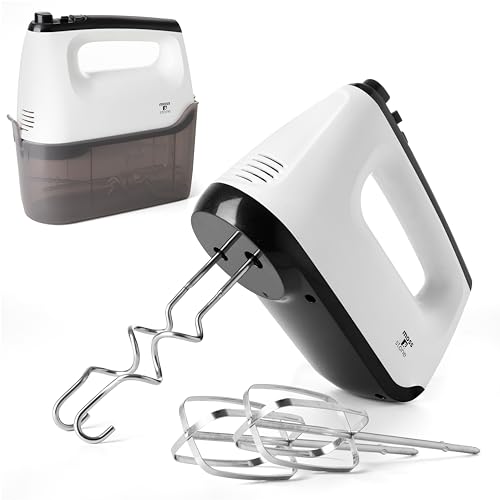
For Christmas baking, the best hand mixer is the one with a truly slow starting speed, sturdy beaters, comfortable handling, and enough strength for the cookie doughs, cake batters, whipped cream, and frostings you actually make. I would prioritize control over flashy specs every time. A hand mixer is especially useful during the holidays because it handles small and medium batches well, stores easily, and makes quick work of the repetitive mixing that comes with a full cookie season.
Wattage can be helpful context, but it does not tell the whole story. Real performance comes from the motor, gearing, beater design, and how steadily the mixer holds its speed once it meets resistance. A mixer can look powerful on paper and still struggle if the low speed is too fast, the beaters are flimsy, or the motor bogs down in thicker batters.
For holiday baking, I care most about three things: a slow first speed that keeps flour in the bowl, a comfortable grip that does not wear out my hand after a few batches, and enough strength to cream butter and sugar without sounding strained. If a mixer surges, changes speed abruptly, or seems to labor through ordinary cookie dough, that matters more than a high wattage number.
A practical hand mixer speed guide makes the same point I rely on in the kitchen: start slowly, then increase only as the mixture allows. That one habit does a lot to prevent mess and overmixing.
Most Christmas baking only needs a few core attachments, and the standard beaters do the bulk of the work. They are what I want for creaming butter and sugar, beating in eggs, mixing cake batter, and bringing together many cookie doughs. More attachments are only useful if they match the recipes you make every year.
Dough hooks can help with small amounts of soft yeast dough, but I would not treat them as a substitute for a stand mixer or hand kneading. They are best for light assistance, not for forcing a compact mixer through stiff bread dough.
A whisk attachment is genuinely useful if you make meringues, whipped cream, or airy frostings. It brings in air more efficiently than standard beaters and gives better control for lighter mixtures. During the holidays, that matters for pavlovas, creamy fillings, and finishing touches that need volume without much bulk.
What I would skip is the idea that every attachment adds equal value. For most home bakers, solid beaters and a useful whisk matter more than a long list of extras.
A hand mixer shines with small and medium batches. It is a smart fit for sugar cookies, soft gingerbread batter, brownies, cake layers, buttercream, cream cheese frosting, whipped cream, and mousse-like fillings. It gives direct control, and that is especially helpful when recipes need gentle mixing at the end.
Cookie dough is where limits show up fastest. Dense dough, cold butter, or a bowl packed with chocolate chunks, nuts, or dried fruit can put real strain on the motor. I think it helps to soften butter properly and keep the batch moderate rather than asking the mixer to compensate for ingredients that are too hard or a bowl that is too full.
Fruitcake and heavier gingerbread mixtures need some restraint too. Mix the batter base with the machine if it moves comfortably, then fold in the heaviest fruit and nuts by hand. That protects both texture and the appliance. Once the dough becomes resistant, a spatula or wooden spoon is usually the better tool.
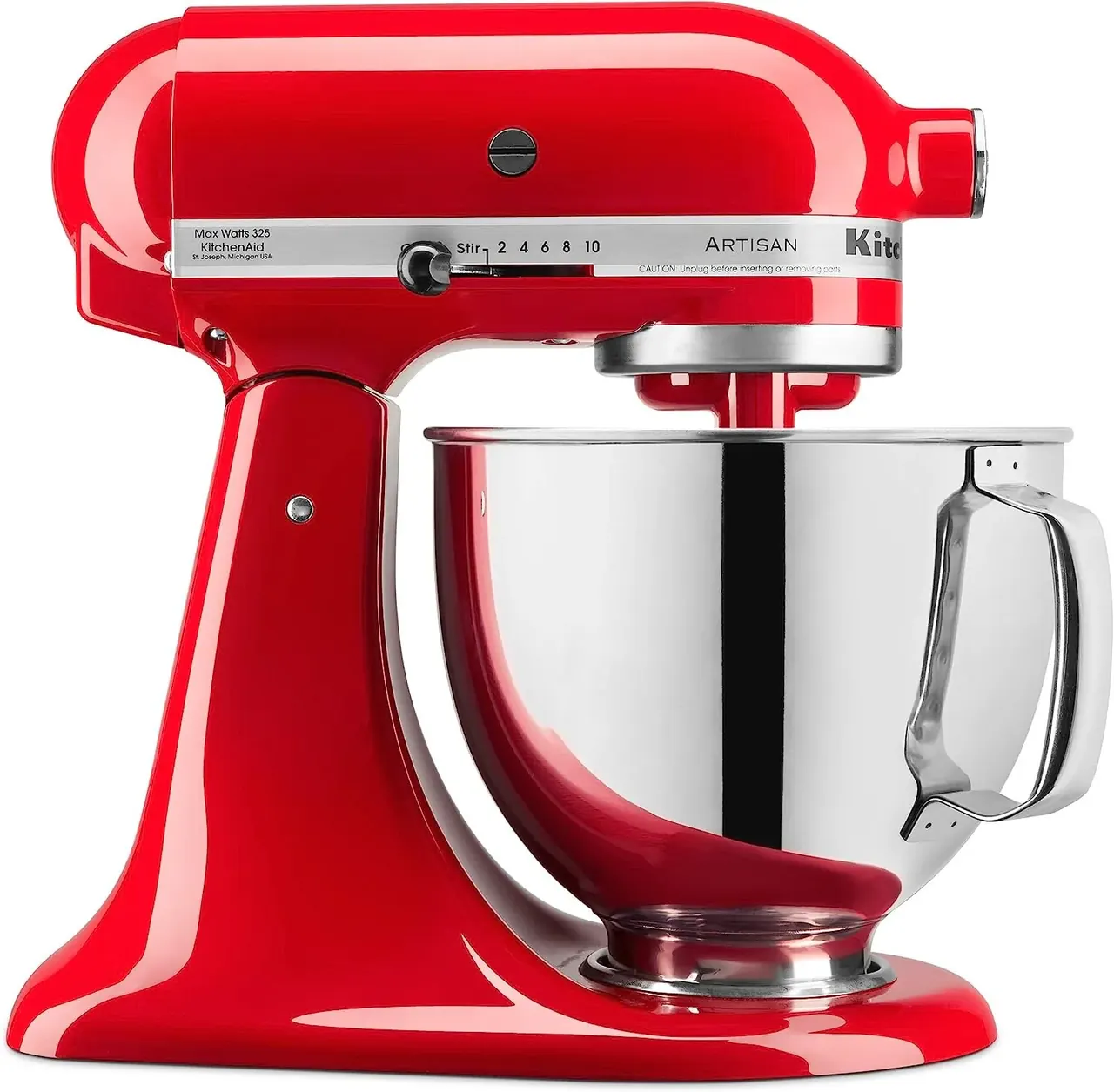
If you regularly make large quantities of stiff dough, the distinction in this hand mixer versus stand mixer comparison is a useful one: hand mixers are portable and flexible, while stand mixers are better for capacity and heavier mixing.
A good hand mixer helps, but technique still decides a lot. One of the most important habits is starting at the lowest speed every time. That keeps flour from billowing across the counter and stops powdered sugar from coating the kitchen.
Butter temperature matters just as much. For creaming, butter should give slightly when pressed but still feel cool. If it is glossy or partly melted, cookies can spread too much and frostings can lose structure. I also prefer to add eggs one at a time and let each one disappear before adding the next.
When dry ingredients go in, I mix only until the flour is nearly incorporated, then finish with a spatula. This is especially important for cakes and cookies, where overmixing after the flour is added can lead to a tougher result. A hand mixer is fast, which is useful, but it can also push a batter past its ideal point if you are not watching closely.
For whipped cream and egg whites, give the mixture room. A bowl with enough space for movement helps the whisk circulate air more evenly. Start slow, increase gradually, and stop as soon as you reach soft or firm peaks. A few extra seconds can take whipped cream from smooth to grainy very quickly.
The first common mistake is judging a mixer by power alone. A controllable low speed and steady handling are more useful in Christmas baking than brute force. The second is trying to push through dough that should be finished by hand. When the motor strains, the batch is too large, or the dough barely moves, stop there.
Another easy mistake is skipping the bowl scrape. Even with a good mixer, unmixed butter and flour can hide along the sides and especially at the bottom. A few deliberate strokes with a flexible spatula prevent dry pockets and uneven dough.
I also think it is worth being cautious with add-ins. Once you have raisins, chopped chocolate, cranberries, or nuts in the bowl, electric mixing often does more harm than good. Folding them in by hand keeps the dough from getting overworked and avoids unnecessary stress on the beaters.
Finally, do not lift the beaters out while they are still running. It is a small thing, but it is behind a lot of splatter.
Holiday baking tends to happen in quick rounds, so prompt cleaning matters. Sugar, butter, and sticky dough harden fast around release buttons and vent areas. Unplug the mixer first, remove the attachments, and wash them according to the manufacturer’s instructions. For the motor housing, wipe with a damp cloth and dry it right away.
Manufacturer cleaning guidance for hand mixers consistently emphasizes the basics: unplug before cleaning, do not immerse the motor body, and keep water away from vents and electrical parts. That is the standard I would follow for any model.
If dough dries onto the beaters or hooks, soaking the removable parts is better than scraping aggressively. Dry everything fully before storing it, and keep the cord loosely coiled rather than wrapped tightly around the body. A quick wipe after each use is easier than dealing with hardened frosting after three days of baking in a row.
The best one has a slow starting speed, sturdy standard beaters, comfortable balance in the hand, and enough strength to cream butter smoothly and mix ordinary cookie dough without strain. For cakes and cookies, control matters more than an impressive spec sheet.
I would look for low-speed control, comfortable handling, easy attachment release, removable parts that clean easily, and attachments you will actually use, especially standard beaters and a whisk. Good storage for attachments is also helpful during a busy baking season.
It can handle softer gingerbread batters and some moderately thick mixtures, but very stiff doughs and dense fruitcake batters can push it too far. Mix as much as is comfortable on low speed, then switch to a spatula, wooden spoon, or hand kneading when resistance increases.
Usually, yes. Hand mixers are very well suited to whipped cream, buttercream, cream cheese frosting, and other small-batch fillings. Start slowly to avoid splatter and stop as soon as the texture looks right.
If the motor sounds strained, the beaters slow noticeably, the dough is stiff enough to climb the beaters, or the bowl is too crowded to move ingredients properly, it is time to stop. That is when hand mixing or a stand mixer makes more sense.
The best hand mixer for Christmas baking is not the one with the biggest claim attached to it. It is the one that starts gently, mixes steadily, feels comfortable through several batches, and knows its limits with heavier doughs. Use it for the jobs it does well, clean it promptly, and it will cover a surprising amount of holiday baking.
This page contains affiliate links. If you buy through them, Stripes & Willows may earn a commission at no extra cost to you — it never affects what we recommend.